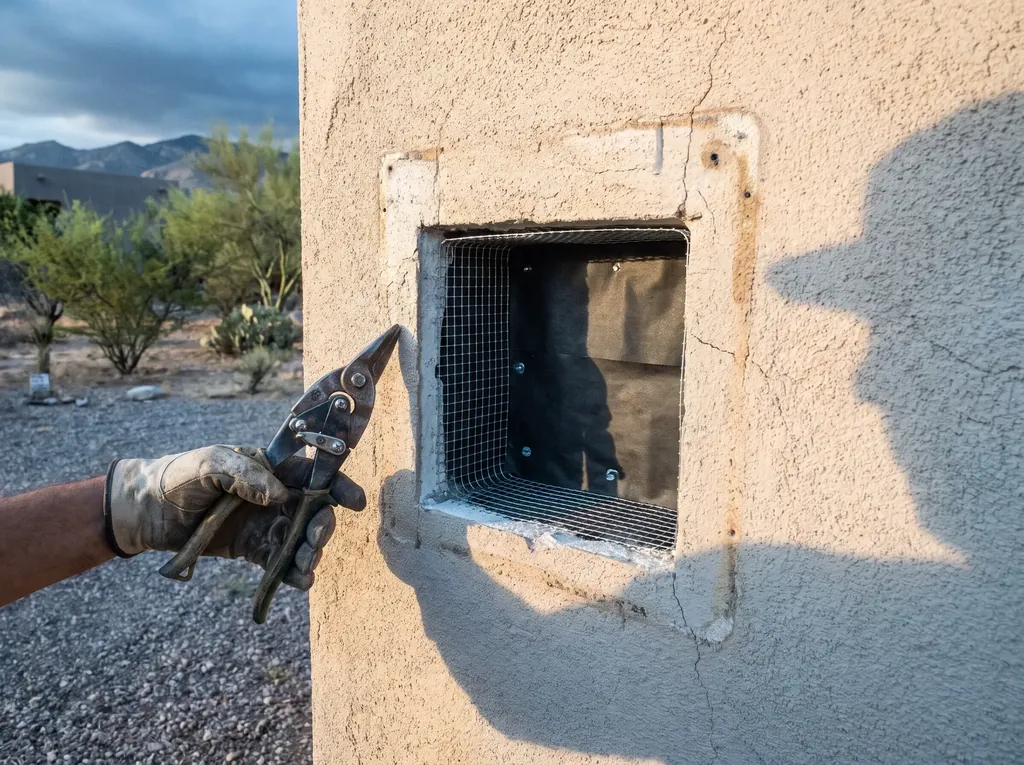
Stucco Patching and Hole Repair
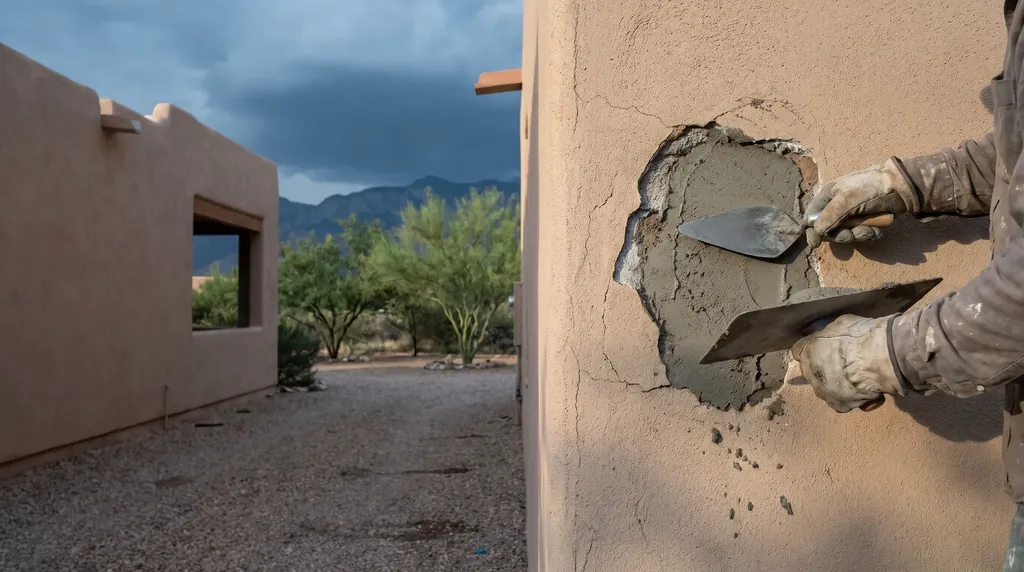
Holes, impact damage, removed fixtures and failed old patches rebuilt in layers, then textured to blend with the wall around them.
A crack that keeps growing. A stain under the parapet after the monsoon. A patch that never matched. We find out what is actually going on with the wall, tell you straight whether it is serious, and fix it so the repair disappears.
Diagnosis first, and we will tell you when a crack is only cosmetic
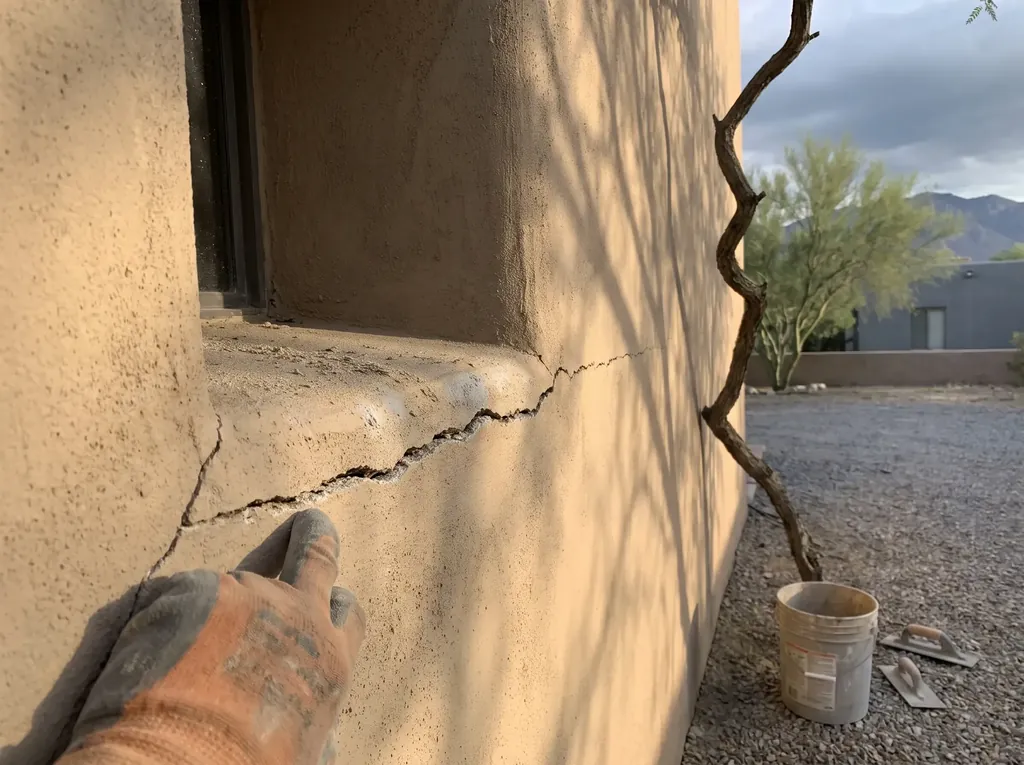
You noticed something on the wall. Maybe it is a line running off the corner of a window, a brown tide mark under the roofline, or a soft spot that crumbles when you press on it. Now you want to know two things: is this serious, and what is it going to take?
The look of a wall rarely answers those. A wide, ugly crack can be old and stable. A tidy little stain can mean water has been sitting behind the stucco for three monsoons. So every job starts the same way: we tap the wall for hollow spots, follow any water back to where it gets in, and tell you what we found in plain language.
Tucson is hard on stucco in ways that generic advice misses. The sun chalks and fades the finish coat. Walls heat up all day and cool off fast at night, so the surface is always moving a little. Monsoon storms drive rain sideways into every crack and into the parapets on flat roofs. Caliche and clay soils shift under foundations as they wet and dry, and irrigation overspray keeps the base of a wall damp in a place that is otherwise bone dry.
Sometimes the answer is a careful repair. Sometimes it is leave it alone. When patches really have stopped making sense, we will show you why.
Start with what you are seeing on the wall. Here is what each kind of work involves.
Holes, impact damage, removed fixtures and failed old patches rebuilt in layers, then textured to blend with the wall around them.
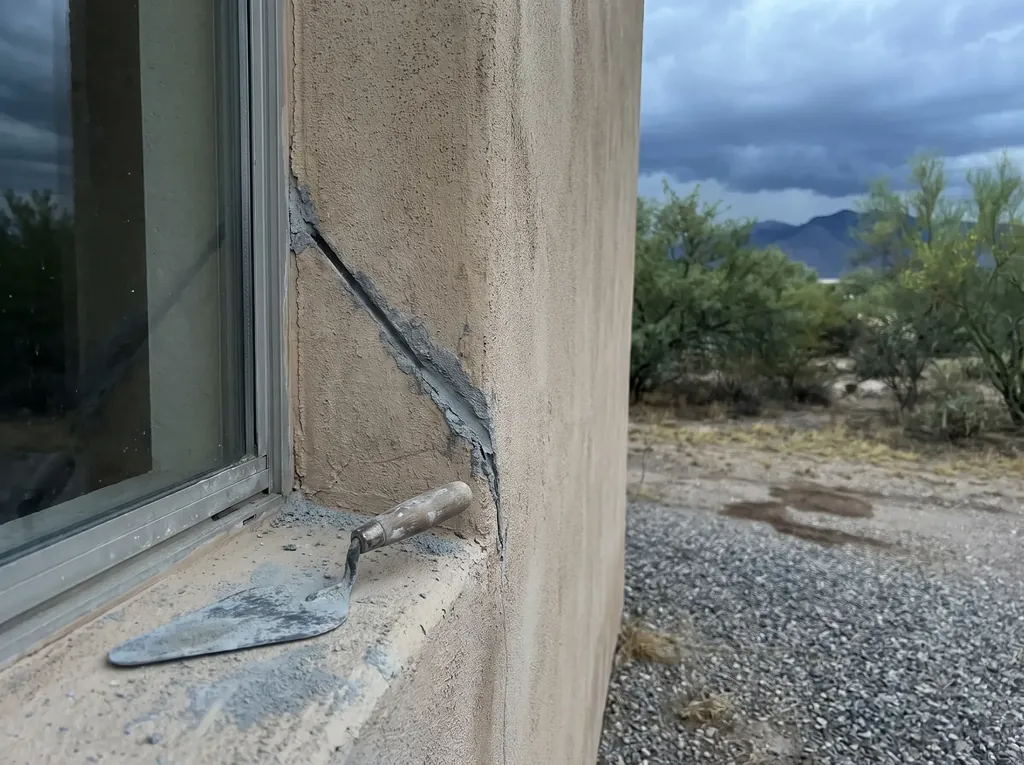
Hairline, window corner and settlement cracks diagnosed first, then routed, filled or rebuilt according to what is actually causing them.
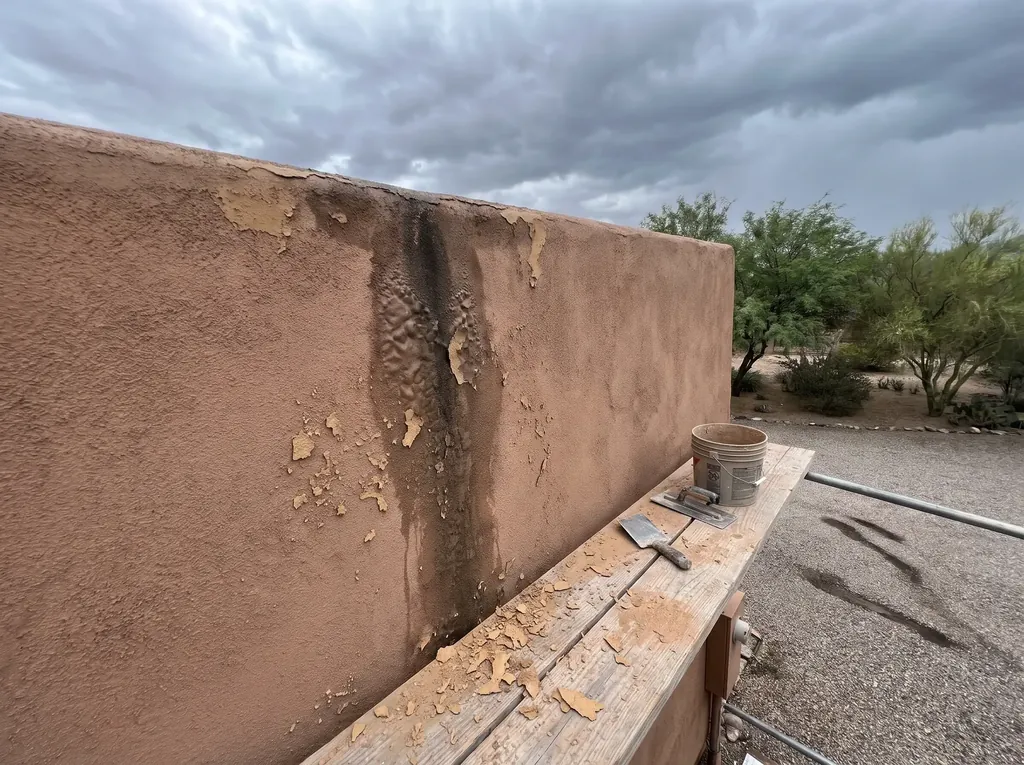
Stains, bubbling and crumbling stucco traced to the source, with parapet caps and roof transitions corrected before the wall is rebuilt.
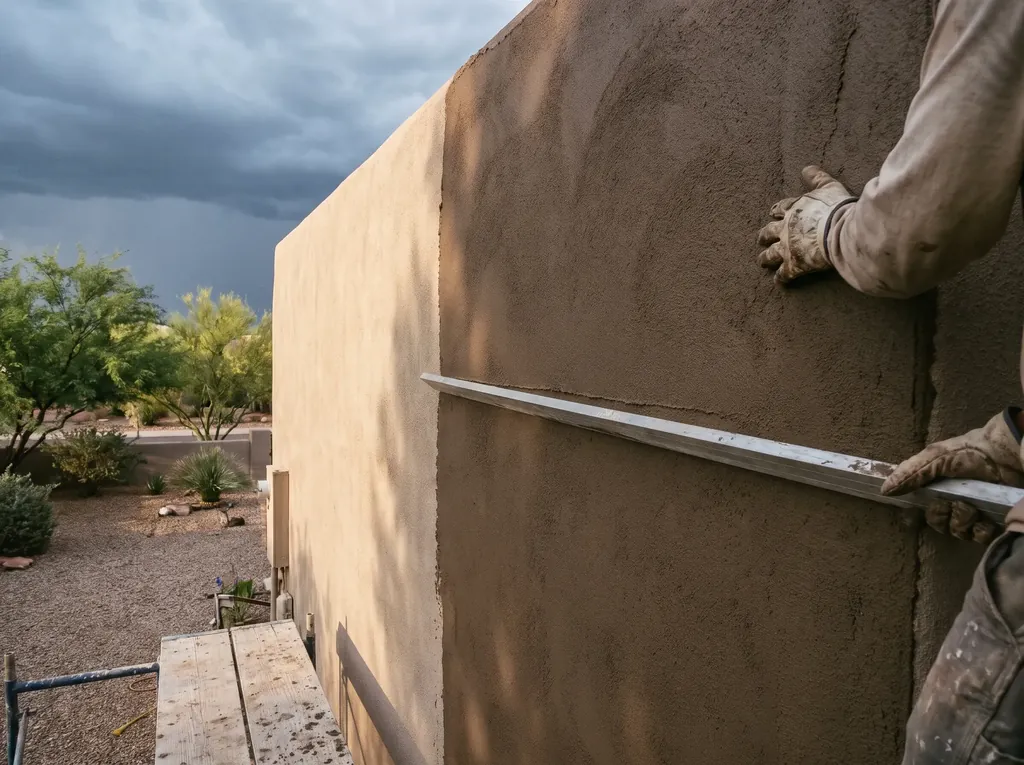
When patches stop making sense, failed stucco is removed or resurfaced and the whole elevation gets a new, even finish.
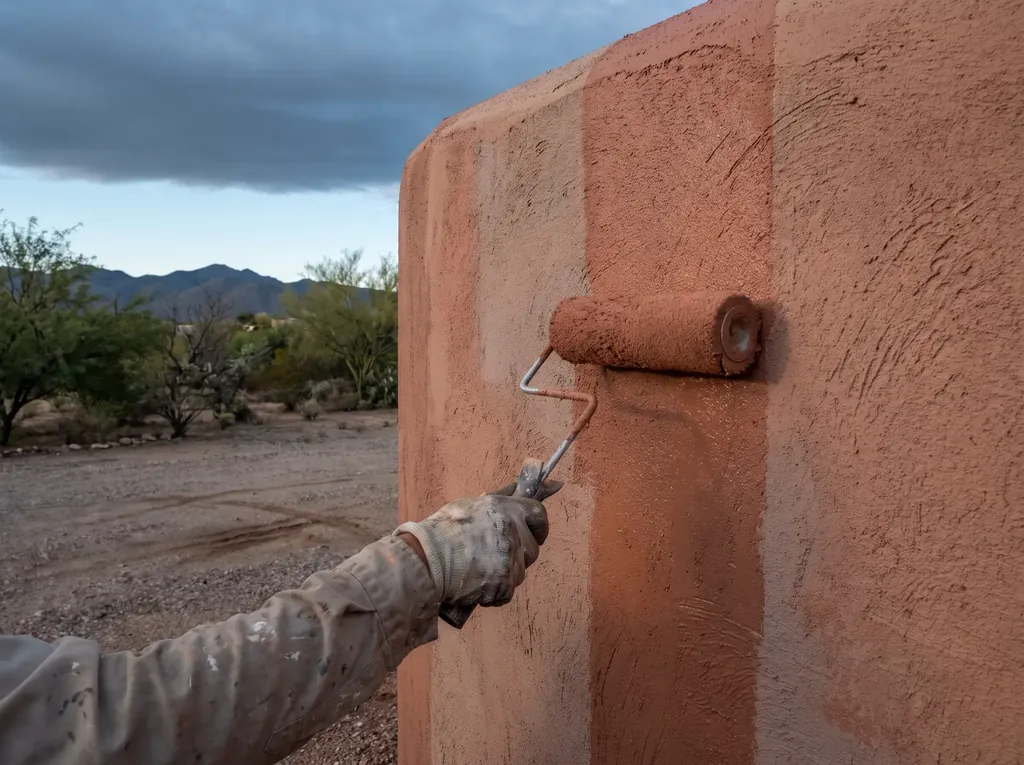
Prep, crack treatment and coatings that suit Tucson sun, including elastomeric systems when the wall and the budget call for them.
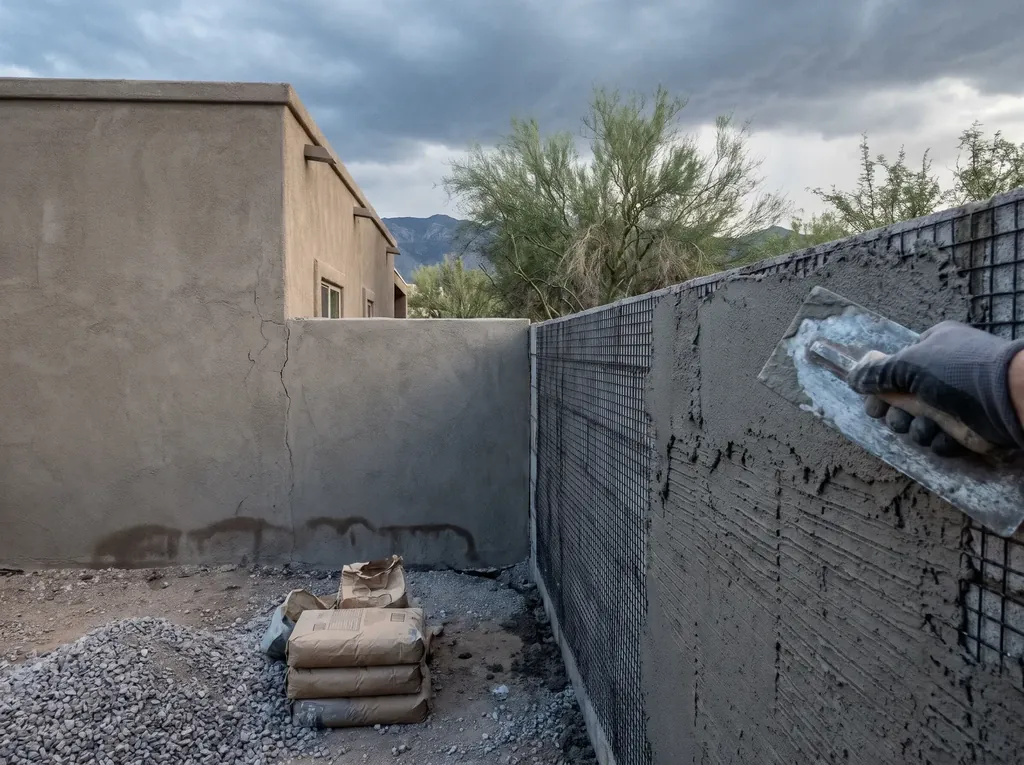
Three coat and one coat systems for additions, garden walls and exterior upgrades, tied properly into existing surfaces.
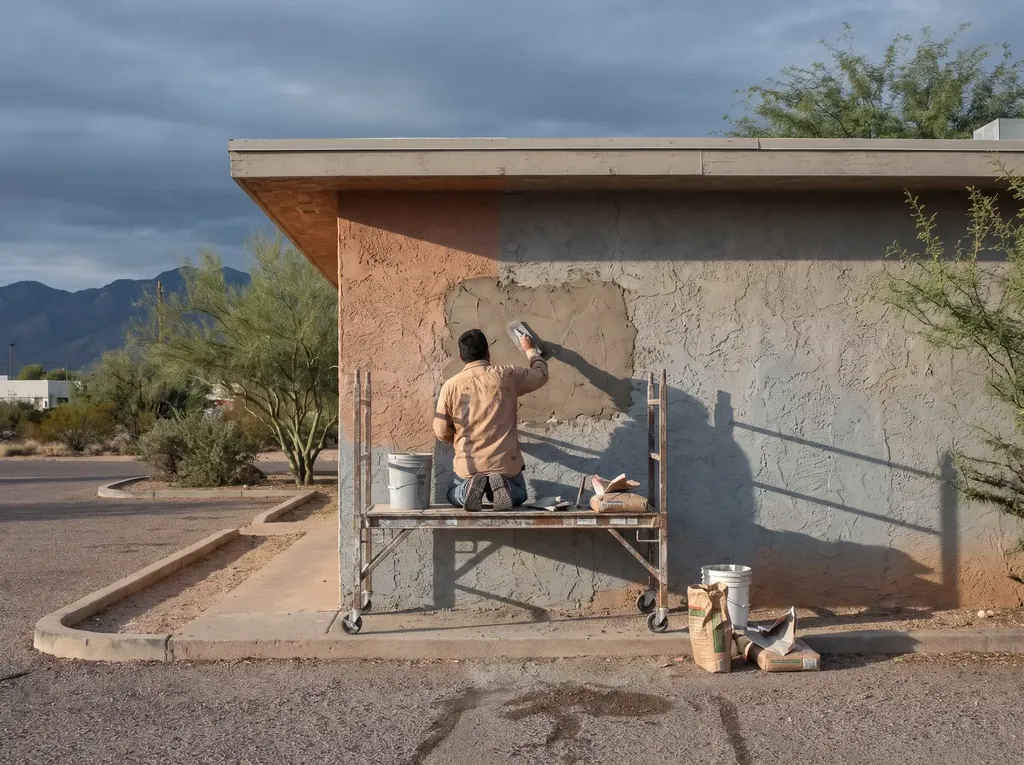
Repairs and recoats for retail, office, multifamily and HOA properties, scheduled around tenants with one written scope.
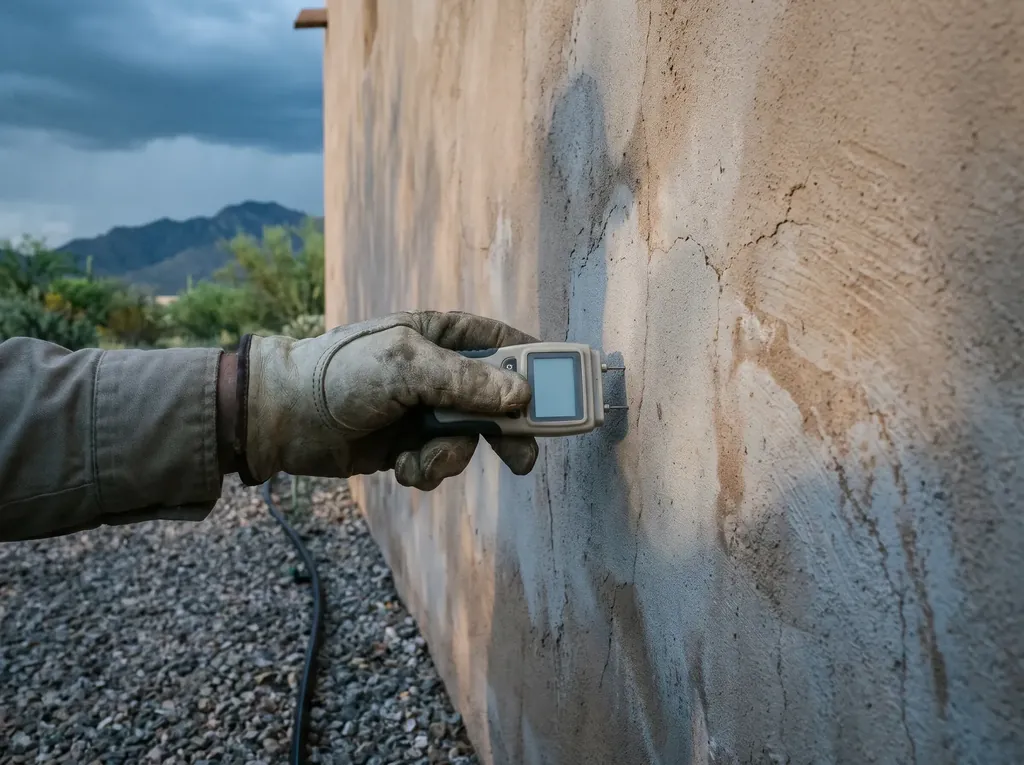
A plain language look at cracks, staining and soft spots before you buy, sell or budget for repairs.
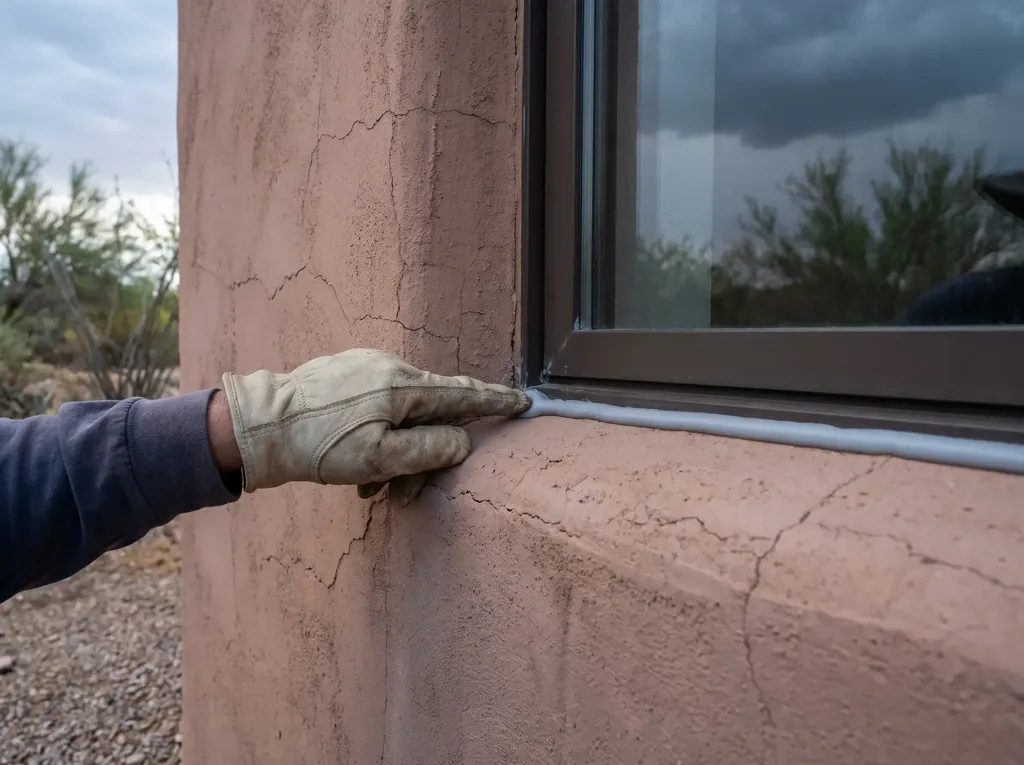
Sealants and breathable coatings that help a sound wall shed monsoon rain.
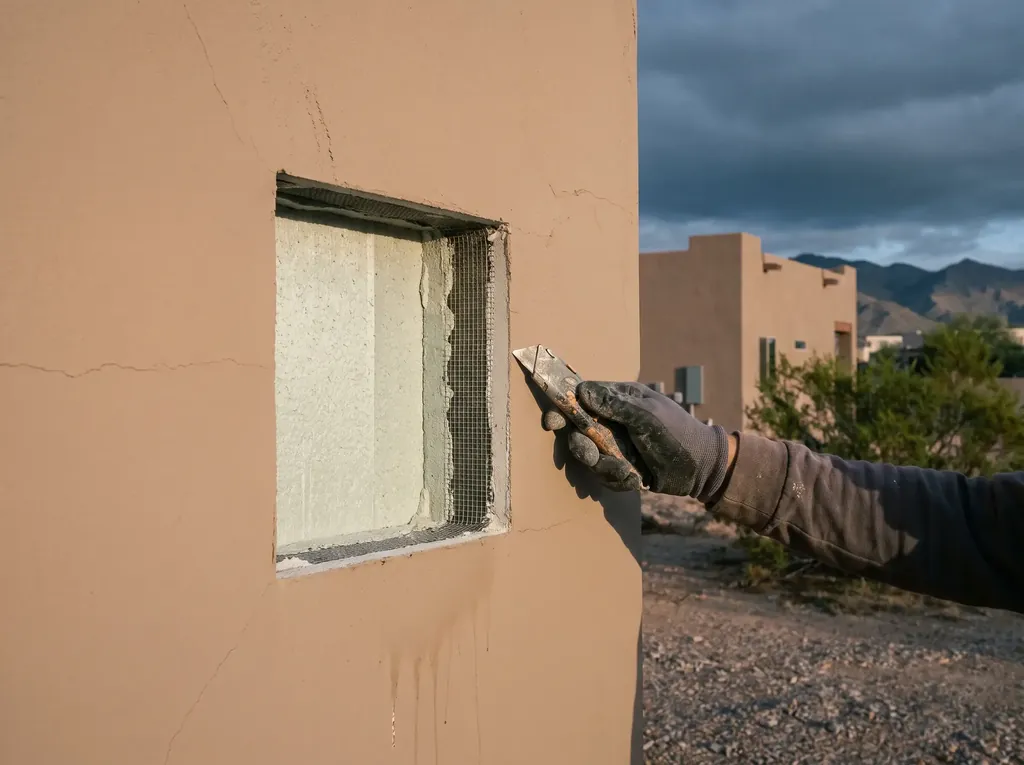
Foam and acrylic finish systems repaired with compatible materials rather than cement patches.
A number without a cause is a guess. A patch over an active leak or a moving crack just gives you the same problem again with a smaller bank balance.
Plenty of hairline cracks are normal for cement stucco in this climate. If yours is one of them, you will hear that from us, along with what would change our mind.
On a flat roofed home the wall is often the victim, not the cause. We look up at the parapet cap, the roof transition and the scupper before anyone picks up a trowel.
Lace, dash, sand and smooth Santa Fe finishes each take different hand work to blend, and an old wall has faded in its own way. If a patch cannot disappear by itself, we will explain what it would take.
Call or send a request. Photos help, and so does knowing when you first noticed the problem and whether it changes after rain.
We look at the damage and around it, sound the wall for hollow areas, check the weep screed and the base of the wall, and go up to the parapet when water is involved.
You get what we think is causing it, what we would do about it, and what we would leave alone. Then you decide.
We remove what has failed until we reach stucco that is still bonded, and repair the paper and lath behind it where they have been damaged.
Each coat gets time to cure. In dry Tucson air that means misting, and timing the work around the heat of the day.
We match the texture by hand and bring the color together so your eye goes to the wall rather than the repair.
We repair stucco in Tucson, Oro Valley, Catalina Foothills, Marana, Sahuarita, Casas Adobes, Vail and Green Valley.
Areas we serveYes, and most of the time repair is the right answer. Cracks, holes, stains and small areas of failed stucco can all be fixed without redoing the wall. The exception is stucco that has lost its bond across a large area, or a wall with so many old repairs that there is little sound material left to tie into.
It depends on the size of the damage, whether water has reached the paper and lath behind it, how high the work is, how hard the texture is to match, and whether the color has to be brought together across a whole wall. A hairline crack and a rotted parapet are very different jobs. We give you a written number once we have seen the wall.
Repair, when the stucco is still bonded and the damage is local. Replacement starts to make sense when large areas sound hollow, when water has rusted the lath across a wall, or when the cost of repeated patching gets close to doing the elevation once and properly. We would rather tell you which one you have than sell you the bigger job.
Worry when a crack is wide enough to catch a fingernail and getting wider, when one side sits higher than the other, when it stair-steps or runs across several feet of wall, or when you see staining around it. Doors and windows that started sticking at the same time are another sign. A stable hairline crack is usually not an emergency.
It soaks the building paper, rusts the wire lath and rots any wood framing or sheathing it reaches. On the outside you may see stains, bubbling paint or white mineral deposits, usually well after the damage began. Since Tucson walls dry out quickly on the surface, the problem can stay hidden for a long time.
That comes down to your policy and the cause of the damage. In general, policies are written around sudden events rather than wear, aging or slow leaks, but the wording varies. Check your own policy and ask your insurer. We can describe what we found on the wall so you have something specific to discuss with them.
Send a few details, and photos if you have them. We will call you back to arrange a look at the wall and give you an honest read on what it needs.
We will call you back to arrange a look at the wall. If you would rather talk now, call(520) 555-0171.
Nothing was sent. Please call (520) 555-0171 and we will arrange a look at the wall.