Hairline and map cracks
Fine, shallow cracks you could not get a fingernail into, often in a scattered web. Usually shrinkage or surface stress and mostly cosmetic. A good coating at the next repaint often handles them with no separate repair.
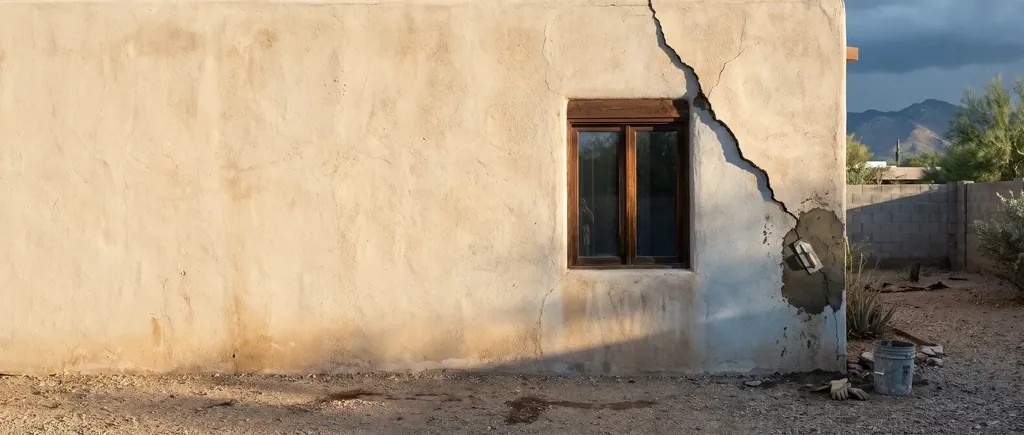
You spotted a crack and now you cannot stop looking at it. Good. Some cracks are nothing to lose sleep over and some are the first sign of a real problem. We will tell you which one you have before we talk about fixing anything.
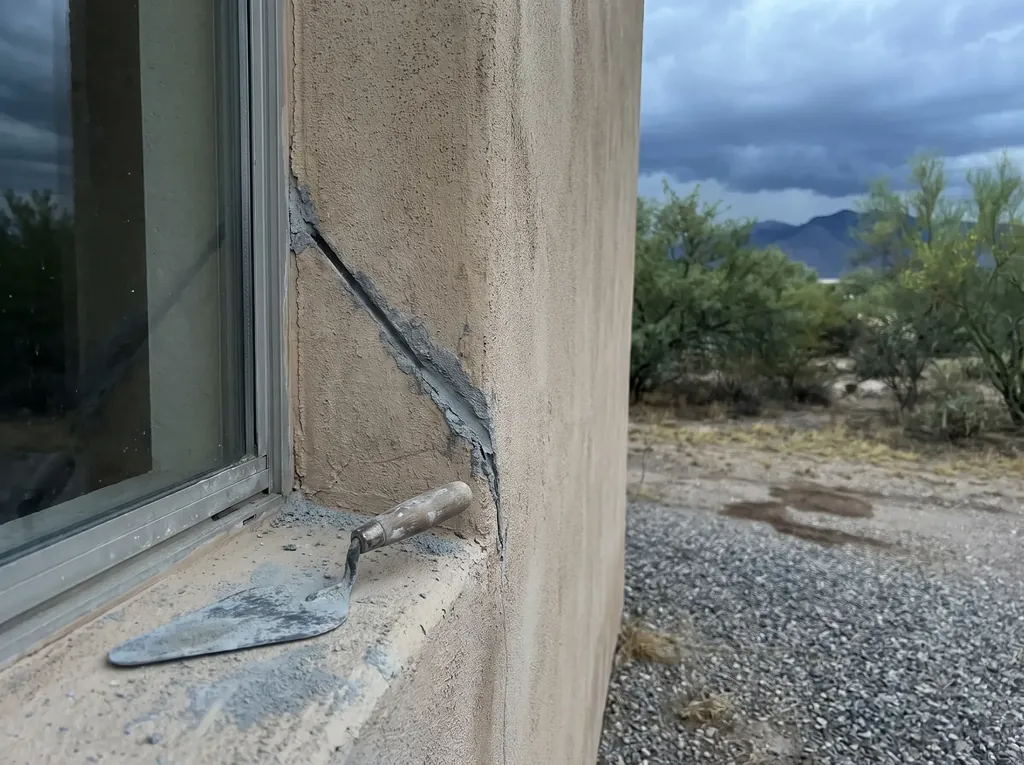
Cement stucco cracks. It is a thin, hard skin over a building that never fully stops moving, and in Tucson it lives through conditions that would test any material. A west wall can get hot enough to burn your hand in the afternoon and then cool sharply overnight. It expands and shrinks with that swing, day after day. Add a little shrinkage from the original cure and fine cracks are close to inevitable.
So the first job is not filling anything. It is reading the crack. How wide is it? Is it getting wider? Where does it start and which way does it run? Does one side sit proud of the other? Is there staining around it? A fine crack in a random map pattern tells a very different story from a diagonal one leaving the corner of a window, and that tells a different story from a stair-step line running up a block wall.
Some of those answers end with us saying leave it alone, or touch it up next time the house gets recoated. We are comfortable saying that. Others mean water has a path into the wall every monsoon, or that the ground under the house is shifting. Caliche and clay soils here move as they wet and dry, and no amount of filler will outlast movement that is still going on. Those need the cause dealt with first.
Fine, shallow cracks you could not get a fingernail into, often in a scattered web. Usually shrinkage or surface stress and mostly cosmetic. A good coating at the next repaint often handles them with no separate repair.
Diagonal cracks leaving the corners of openings, where stress concentrates. They are common on homes without enough control joints. They tend to come back if simply smeared over, so they get opened and properly filled, or rebuilt.
Wider cracks, stair-step lines on block, cracks with one side offset, or cracks that came with sticking doors. Before stucco work, these need an answer about movement. We tell you when that question belongs to a structural engineer.
We look at how open the crack is, how it travels and whether it stays in the finish coat or goes through the stucco. A crack that goes all the way through deserves more respect.
We compare both sides of the crack for offset, check nearby doors and windows, and look for old repairs that have reopened. A crack that has cracked again through a past repair is telling us it is still active.
Staining, efflorescence, bubbling paint and hollow stucco around a crack mean water is already getting in. That changes the repair, and sometimes moves the job to the water damage side of what we do.
You get our read on what caused it, the sensible repair, and what happens if you wait. If waiting is fine, we will say that too, and tell you what to watch for.
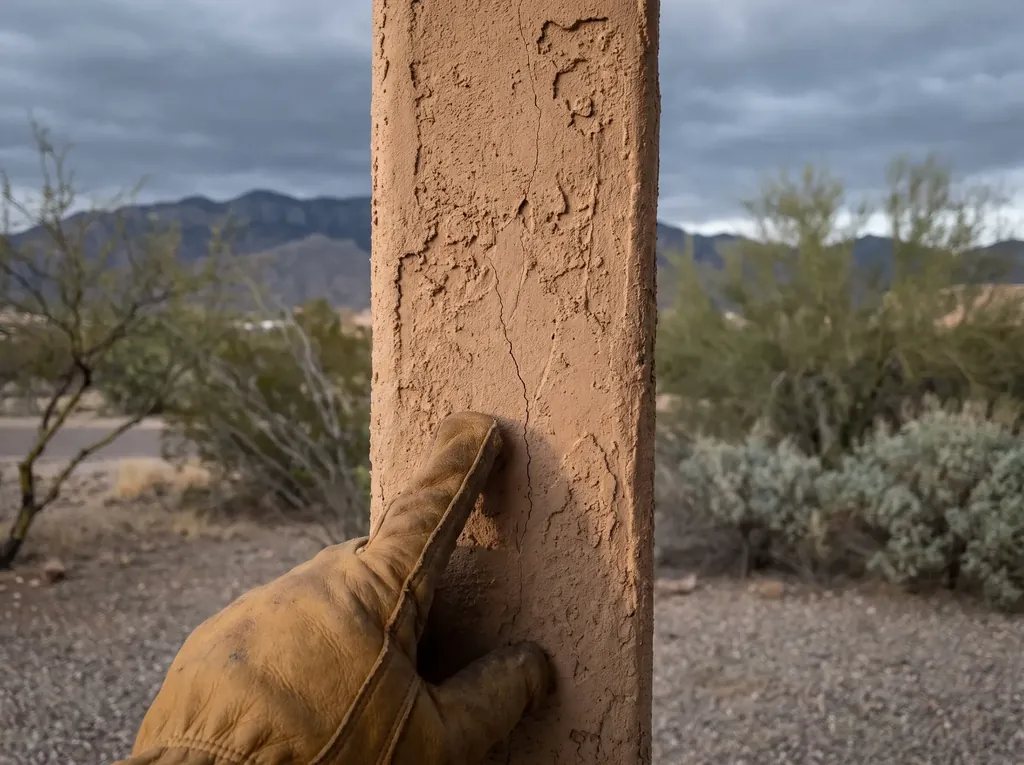
Some do not. If the crack is stable, fine and dry, we may recommend leaving it until the next coating cycle, where a suitable coating can handle it.
If water or ongoing movement is behind the crack, that gets addressed first. That can mean a parapet repair, moving irrigation away from the wall, adding a control joint, or getting an engineer's opinion on the foundation.
A surface smear does not last. For anything beyond a hairline, we route the crack into a clean groove with a firm edge, then clean out all the dust so the new material has something to bond to.
Stable cracks get a compatible, flexible filler or a cement based fill that suits the wall. Where the stucco on either side has come loose, we cut out that band and rebuild it in layers over sound lath or masonry.
Filler has no texture of its own, which is why so many crack repairs show as a smooth snake across the wall. We work the finish over the repair by hand so it reads like the wall around it.
Depending on the wall, we touch up, fog coat or recoat to a natural break line. If the wall is due for coating anyway, doing both at once is often the cheapest way to get a clean result.
We will tell you when your crack is only cosmetic. It may sound like poor salesmanship, but it means that when we do say something needs fixing, you have a reason to believe it. Homeowners often hear either that it is nothing or that the whole house needs redoing, and the truth is usually somewhere more specific.
We also think about crack repair in terms of whether it will stay fixed. Stucco is rigid, and a rigid patch on a moving crack cracks again along the same line. A flexible filler left smooth shows forever. Our job is to pick the method that fits the cause, then make it look like nothing happened.
And we know where our work stops. We repair stucco. We do not assess foundations. If what we see suggests the structure is moving, we will tell you plainly, explain what we saw, and suggest you get a structural engineer's opinion before spending money on the surface.
Send a photo with a coin or a tape beside it for scale, and tell us when you first noticed it. We will tell you what we think and whether it needs a closer look.
Shrinkage as the cement cures, stress concentrated at the corners of windows and doors, building and soil movement, walls expanding and contracting with temperature, missing or badly placed control joints, and impact. In Tucson, big daily temperature swings and caliche and clay soils that move as they wet and dry make several of these worse.
Yes. Fine hairline cracks are a normal feature of cement stucco, particularly on an older wall or one that faces full sun. They rarely mean anything is wrong with the house. It still pays to look at them every so often, and to pay attention if one gets wider or starts to stain.
You can, and a paintable, flexible exterior sealant will keep water out of a fine crack for a while. The drawback is that smooth caulk does not look like textured stucco, so it tends to show, and direct Tucson sun will shorten its life. It is a reasonable stopgap, but it does not address why the crack opened.
Ordinary paint will hide a hairline crack only until the wall moves again, usually within a season or two. A thicker, flexible coating can bridge fine cracks for much longer, but it has tradeoffs of its own, including reduced breathability. Make sure the wall is dry, and do not paint over a crack that is actively leaking.
Yes, provided the cause is dealt with. A stable crack that is opened up, properly filled and finished to match can hold for years. A crack that is still moving will generally come back in the same place regardless of the product, which is why we want to know the cause first.
It depends on how many there are, how high they run, and how the finish has to be blended. A handful of hairlines on a wall due for a coating may need little or no separate repair, while cracks spread across a whole elevation that has to match can take far more work. We give you a written number after seeing the wall, and sometimes the honest answer is that you do not need to spend anything yet.
It depends on your policy and on the cause. Generally speaking, ordinary cracking from settling, shrinkage and aging is treated as wear rather than sudden damage, but a crack caused by a specific covered event may be treated differently. Read your policy and ask your insurer rather than relying on a general answer from us.
We look at and repair stucco cracks across Tucson, Oro Valley, Catalina Foothills, Marana, Sahuarita, Casas Adobes, Vail and Green Valley.
Areas we serve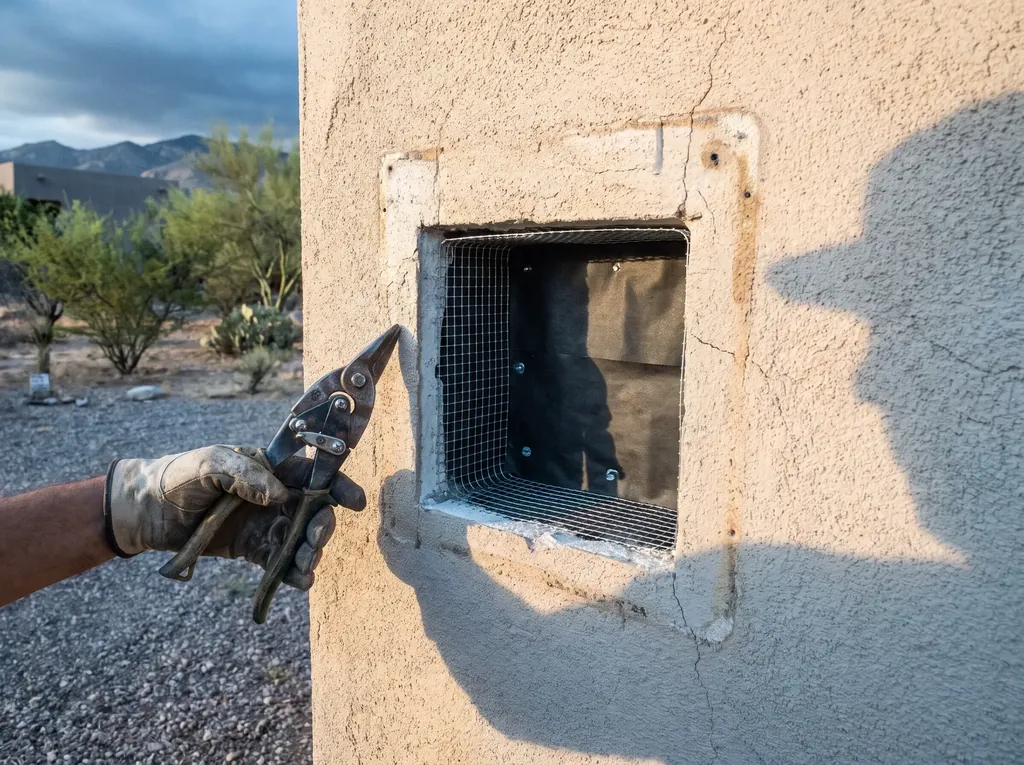
Holes, impact damage, removed fixtures and failed old patches rebuilt in layers, then textured to blend with the wall around them.
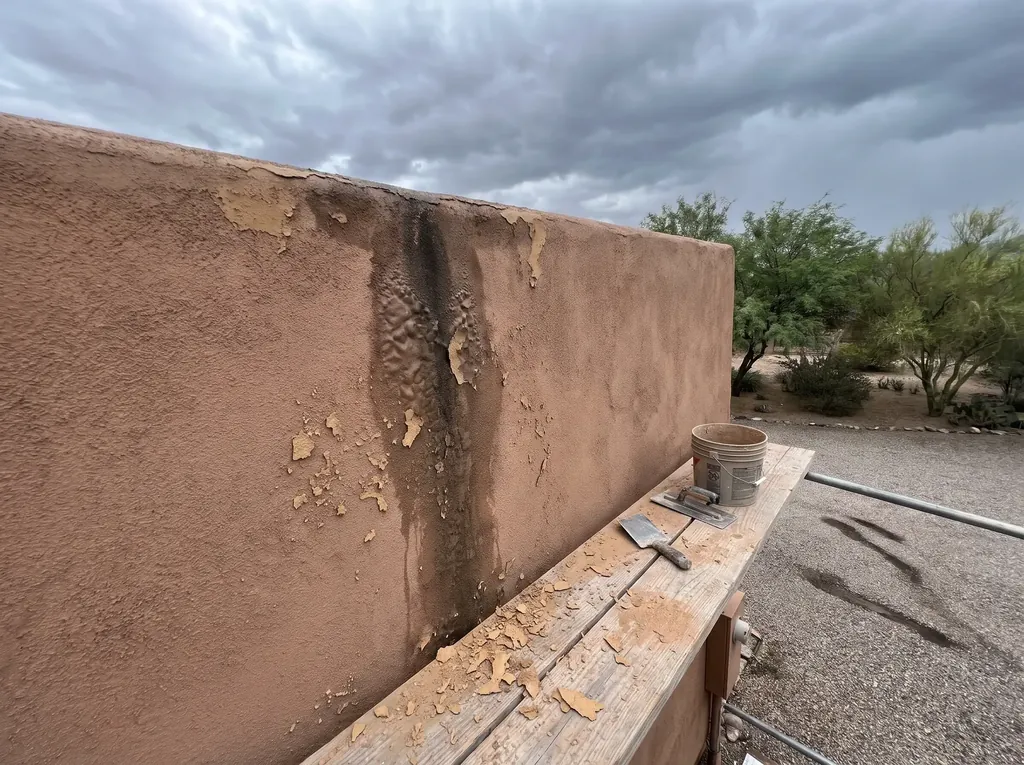
Stains, bubbling and crumbling stucco traced to the source, with parapet caps and roof transitions corrected before the wall is rebuilt.
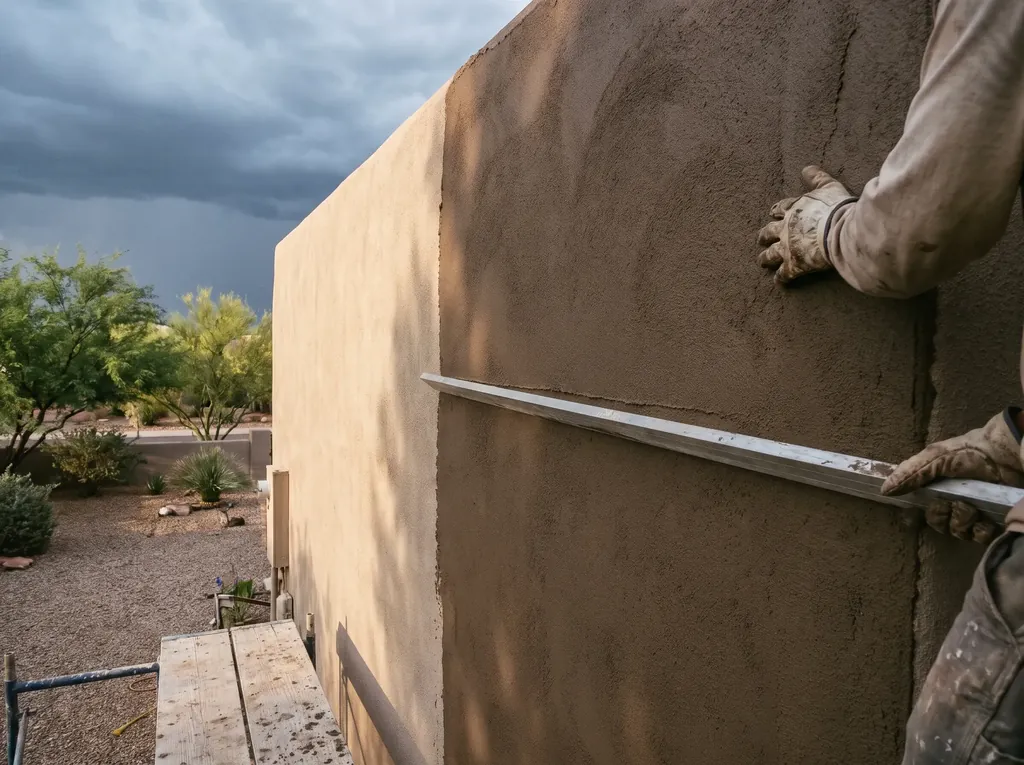
When patches stop making sense, failed stucco is removed or resurfaced and the whole elevation gets a new, even finish.
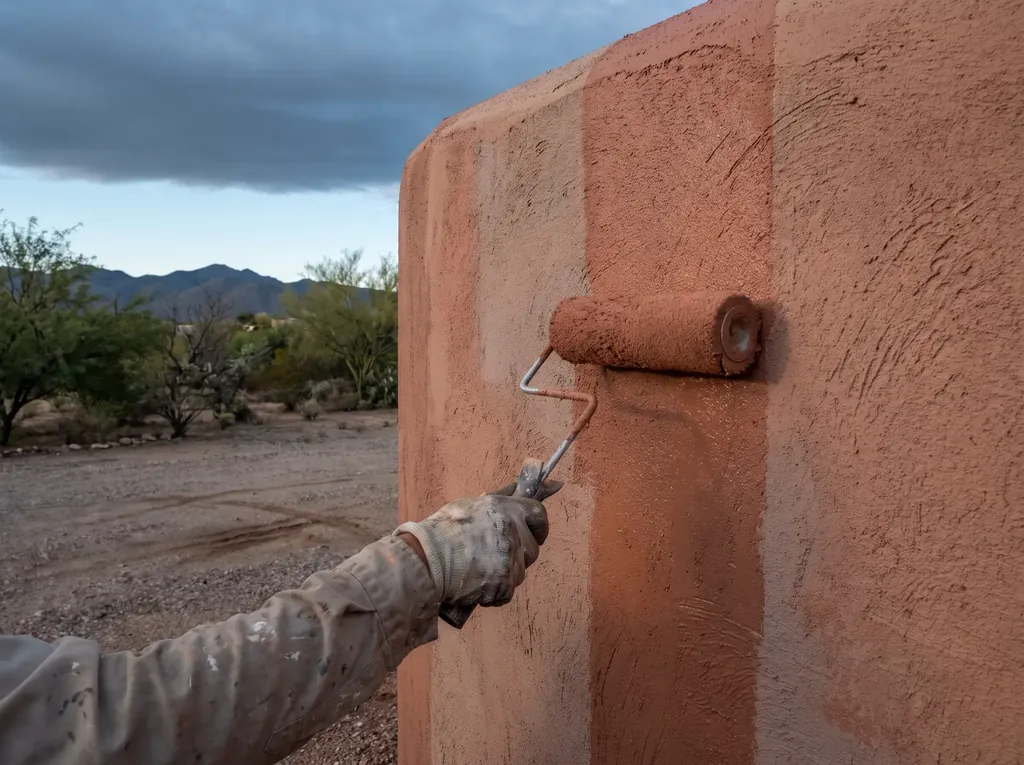
Prep, crack treatment and coatings that suit Tucson sun, including elastomeric systems when the wall and the budget call for them.
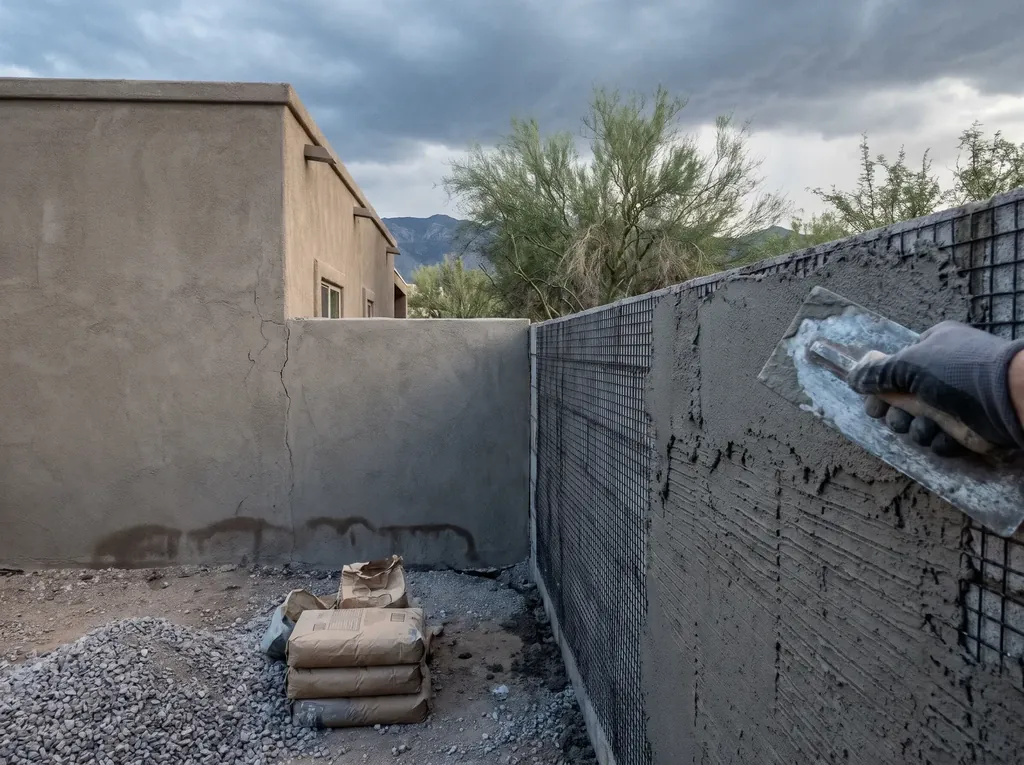
Three coat and one coat systems for additions, garden walls and exterior upgrades, tied properly into existing surfaces.
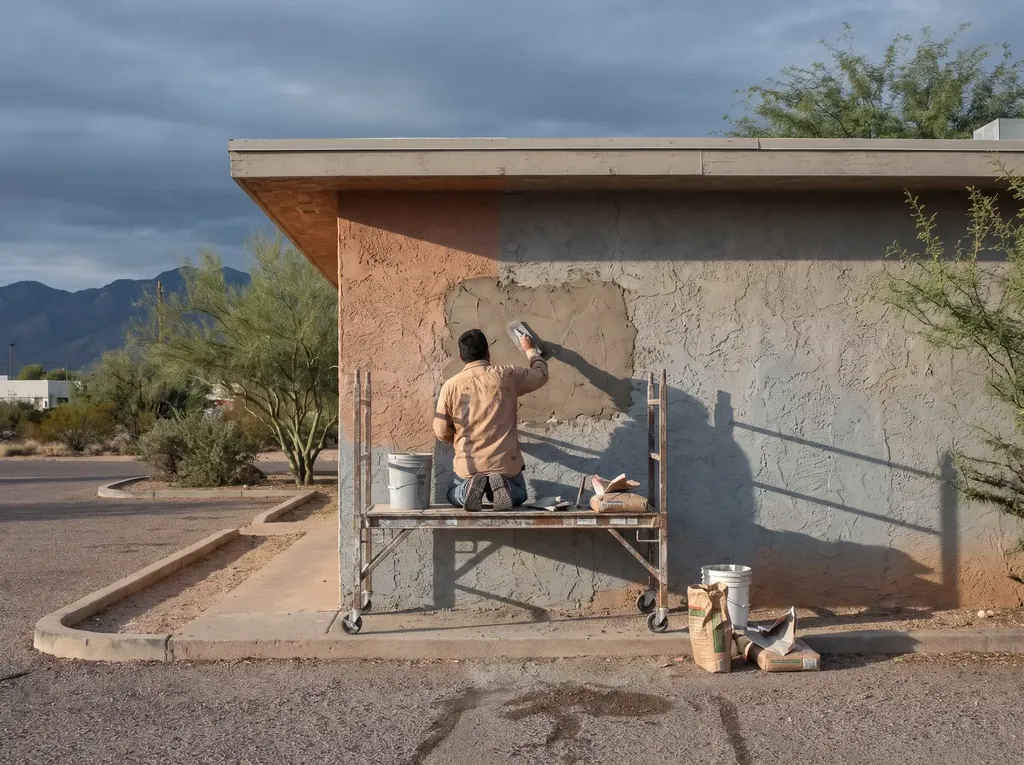
Repairs and recoats for retail, office, multifamily and HOA properties, scheduled around tenants with one written scope.
Tell us where it is, how long it has been there and whether it has changed. A photo helps. We will call you back and tell you whether it needs a visit.
We will call you back to arrange a look at the wall. If you would rather talk now, call(520) 555-0171.
Nothing was sent. Please call (520) 555-0171 and we will arrange a look at the wall.