Fading and chalking
Color bleached out by years of UV, usually worst on south and west exposures. After proper cleaning, a new coat brings the whole wall back to one color and gives the surface fresh protection.
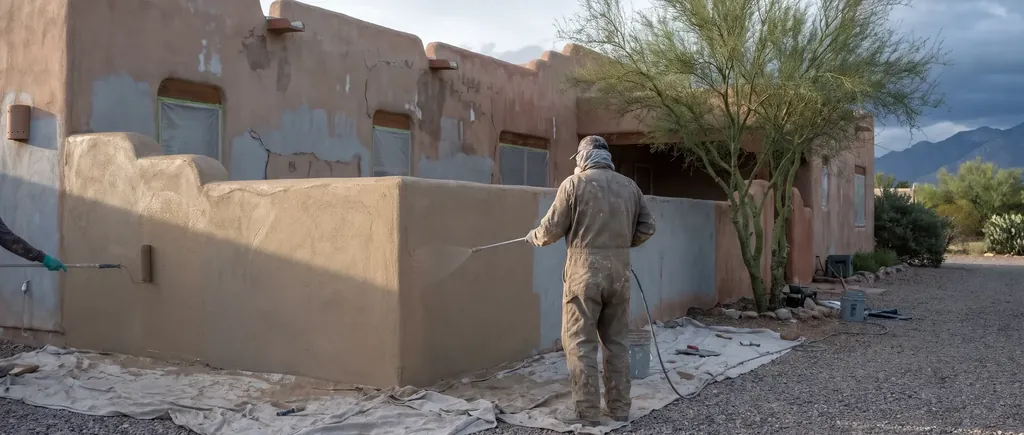
Your wall has gone chalky and pale on the sunny side, and the cracks are starting to show through. A good recoat starts with repairs and with choosing the right coating for your wall, which is not always the thickest and most expensive one.
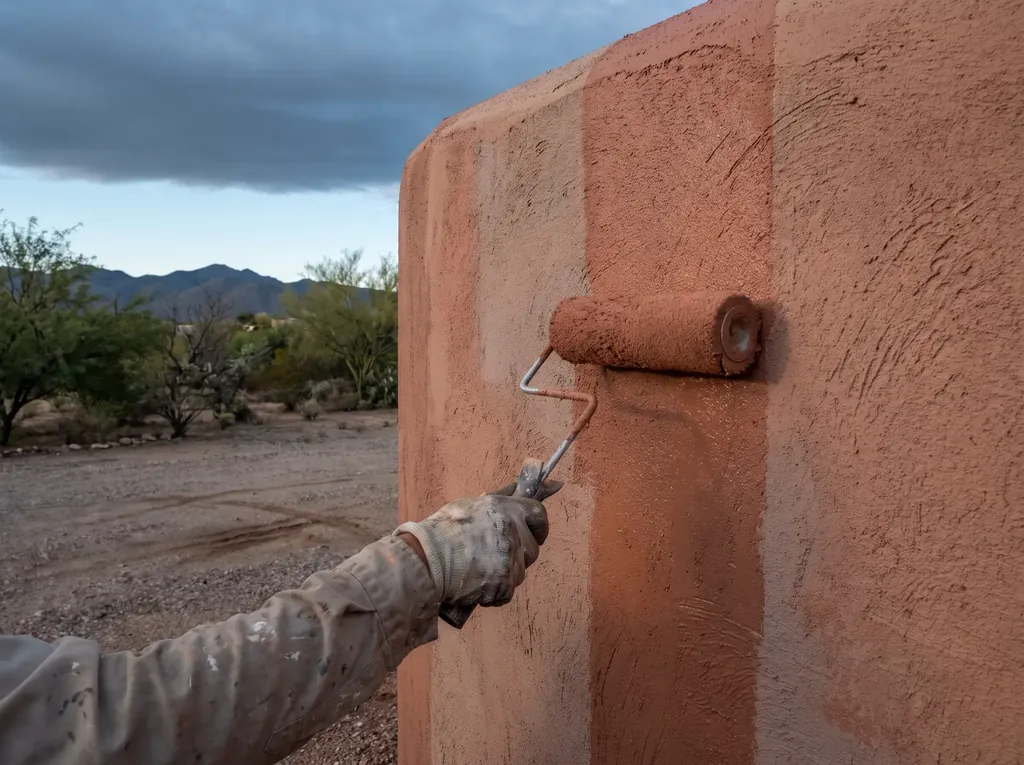
Stucco itself tends to outlast what is on top of it. The Tucson sun works on the finish every day, breaking down binders and pigments until the color fades and the surface turns powdery. Run a finger along a south or west wall, and if it comes away pale and dusty, that is chalk. Paint applied over it will not hold for long, which is why prep decides most of how long a recoat lasts.
The thing that keeps people up at night is choosing the coating. Someone will tell you elastomeric is the only way to go, and someone else will say never paint stucco at all. Neither is right for every wall. Stucco has a useful ability to take on a little moisture and then let it out again. Coatings differ widely in how much of that drying they allow, and those differences matter more on a wall with a history of water than on a healthy one.
So we start by looking at what you have. Is it bare stucco, an old fog coat, standard paint, or an elastomeric that is starting to peel? Are there active cracks? Any water coming from a parapet? The answers narrow the choice to something suited to the wall, the climate and your budget. We work on the exterior only, and every recommendation starts with the repairs that have to happen first.
Color bleached out by years of UV, usually worst on south and west exposures. After proper cleaning, a new coat brings the whole wall back to one color and gives the surface fresh protection.
Fine cracks and mismatched repairs that make a wall look older than it is. We repair what needs it, and then the right coating can tie the surface together and, in some systems, bridge the finest cracks.
Paint and elastomeric that have blistered or sheeted off, usually from moisture or poor prep. We work out why it failed, remove what is loose, correct the cause and recoat with something compatible.
We identify the existing surface, because bare stucco, painted stucco and elastomeric each limit what can go on next. A fog coat, for example, needs uncoated stucco to absorb into, so it is off the table for a painted wall.
We wipe for chalk, test how well old paint is stuck, and look for blisters. Anything loose has to come off, as a new coat can only be as sound as what it is stuck to.
We note cracks that need repair first, and we look for signs of water at the parapets and the base of the wall. Putting a low permeability coating on a wall with a moisture problem can cause it to blister and trap water inside.
We talk through color and sheen, and how they will look in harsh light. If your community has rules on exterior colors, check them and get any approval you need before work starts. We can help you with the information your board asks for.
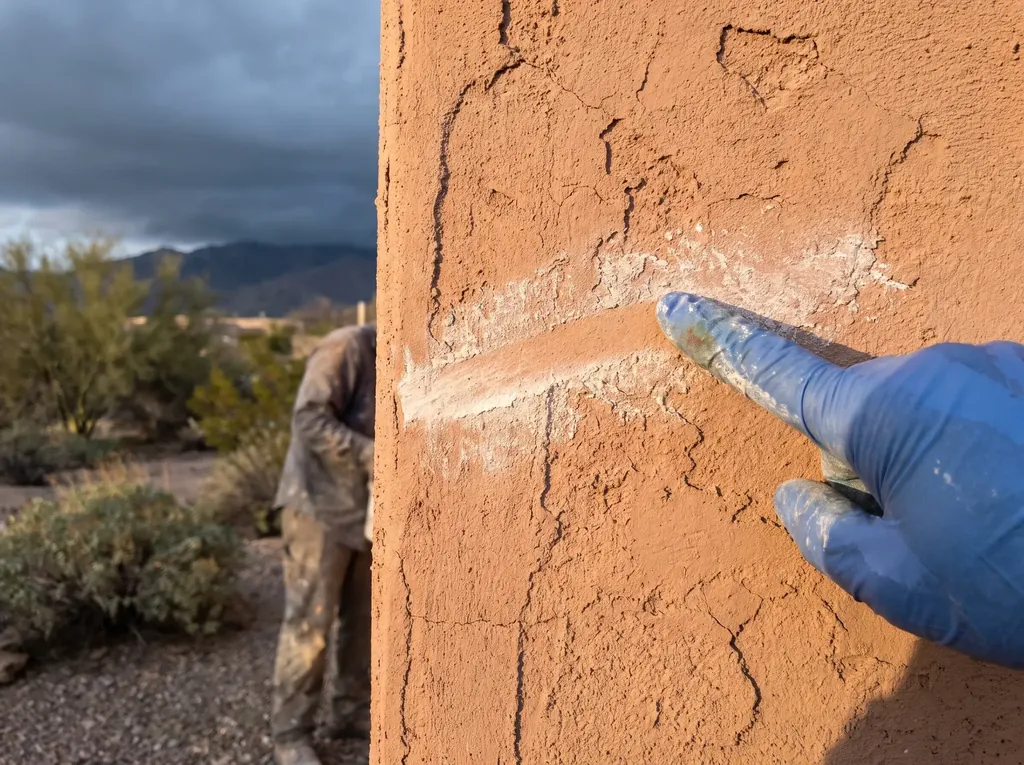
Cracks get opened and filled, holes get patched, and any parapet or water issue gets fixed. Coating over unfinished repairs just locks them in and puts your new color on top of them.
Dirt, chalk, dust and any mildew come off with a low pressure wash and suitable cleaner. Stucco is softer than it looks, and heavy pressure can damage the surface and force water into it.
The wall needs time to dry after washing, and in our climate that is usually quick. Windows, fixtures, gravel and plants get protected, since overspray travels further than people expect on a breezy Tucson morning.
New patches, bare areas and chalky or porous surfaces take a masonry primer or sealer. New cement also needs time to cure before coating, as fresh stucco is highly alkaline and can burn paint.
Rough stucco has thousands of tiny shadowed faces. We often spray for coverage and back roll to work the coating into the texture, because a coat that only sits on top will show pinholes and wear sooner.
We watch surface temperature on walls in direct sun and aim to follow the shade around the house. During monsoon season, we keep an eye on the afternoon sky so that fresh coating does not meet the first storm before it is ready.
A painter sees a surface. We see a wall, and we are looking at why it looks the way it does. A stain may be a parapet problem. A blistered patch may be a damp wall. If those go under fresh paint, you will have a clean looking house for one season and the same problem the following year.
We will also give you a straight comparison of the options. Elastomeric can be an excellent choice for a sound wall with fine cracking. It is thick and flexible and can bridge hairlines. It also costs more, breathes less, needs the correct film thickness to work, can blister on a wall that is holding moisture, and is hard to remove later. A breathable masonry paint or fog coat will not bridge cracks, but it may be a better fit for your wall. You should know that before you buy.
And we do not name a coating as the answer until we have seen the wall. The right product is the one that suits your stucco, your exposure and your plans for the house.
Tell us what the wall looks like, what it was last coated with if you know, and when. We will tell you what your options really are.
On the right wall, yes. Sound stucco with fine cracking is where its thick, flexible film earns its cost, bridging hairlines and shedding wind driven rain. On a wall with moisture problems, it can trap water and blister. It is a good tool rather than an automatic upgrade.
It costs more, and it has to go on thick to work as intended. It is much less breathable than standard masonry paint, so moisture that gets behind it can blister the film. It can pick up dust, it is hard to remove, and it limits what can go over it later. A fog coat, for example, is no longer possible.
Avoid it on a wall that is damp or has an unresolved leak, such as a failing parapet, and on new stucco that has not cured. It is also a poor fit if cracks are still moving more than the coating can stretch, or if you want to keep the look and breathability of natural stucco.
A fog coat is a thin, sprayed cement based color wash. It evens out and refreshes faded stucco, and because it soaks into the surface rather than forming a film, the wall stays breathable. It needs a bare, unpainted surface, it will not bridge cracks, and it gives a more natural and less uniform look than paint.
Often, yes. New patches, bare or very porous stucco and chalky surfaces all benefit from a masonry primer or sealer, while a sound painted wall in good condition may not need one. New cement should be allowed to cure first, because it is alkaline enough to damage paint.
There is no fixed number. It depends on the coating, how well the wall was prepared and how much sun it gets. In Tucson, south and west walls tend to fade well before the north side. Rather than going by the calendar, wipe the wall with your hand. Heavy chalk, peeling or visible fading is your sign.
We would rather not quote an average, because the honest cost depends on the wall area and height, the repair work needed first, how much cleaning and priming the surface requires, and which coating you choose. Elastomeric uses far more material than standard paint. We give you a written number once we have seen the walls.
We recoat stucco homes across Tucson, Oro Valley, Catalina Foothills, Marana, Sahuarita, Casas Adobes, Vail and Green Valley.
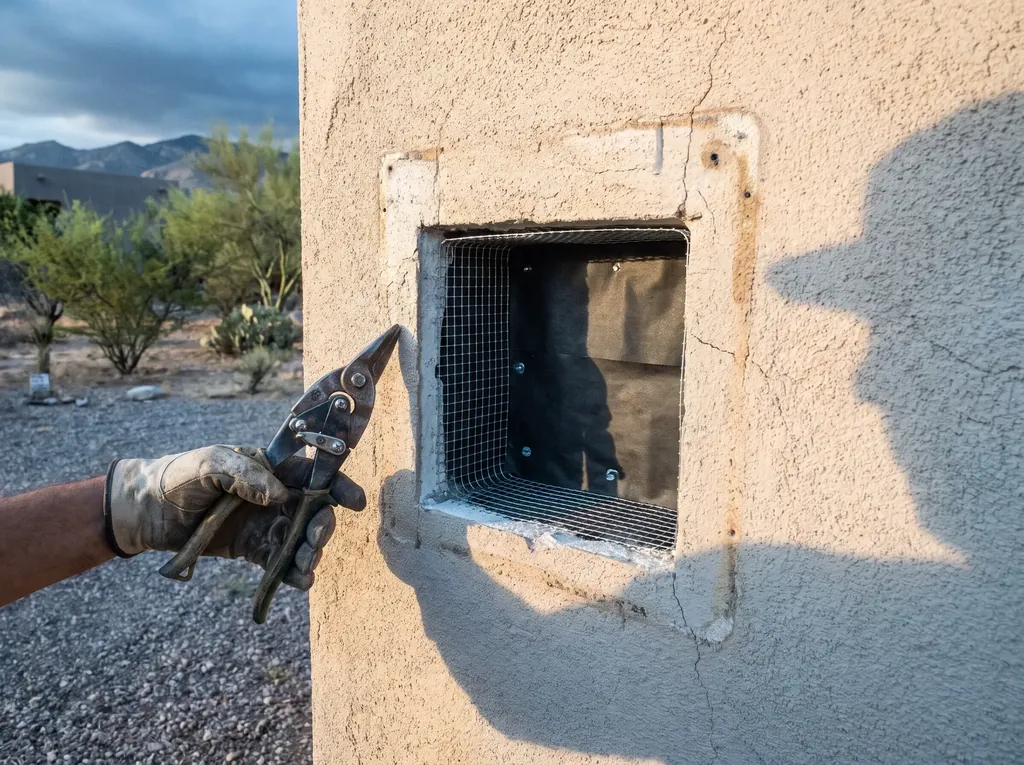
Holes, impact damage, removed fixtures and failed old patches rebuilt in layers, then textured to blend with the wall around them.
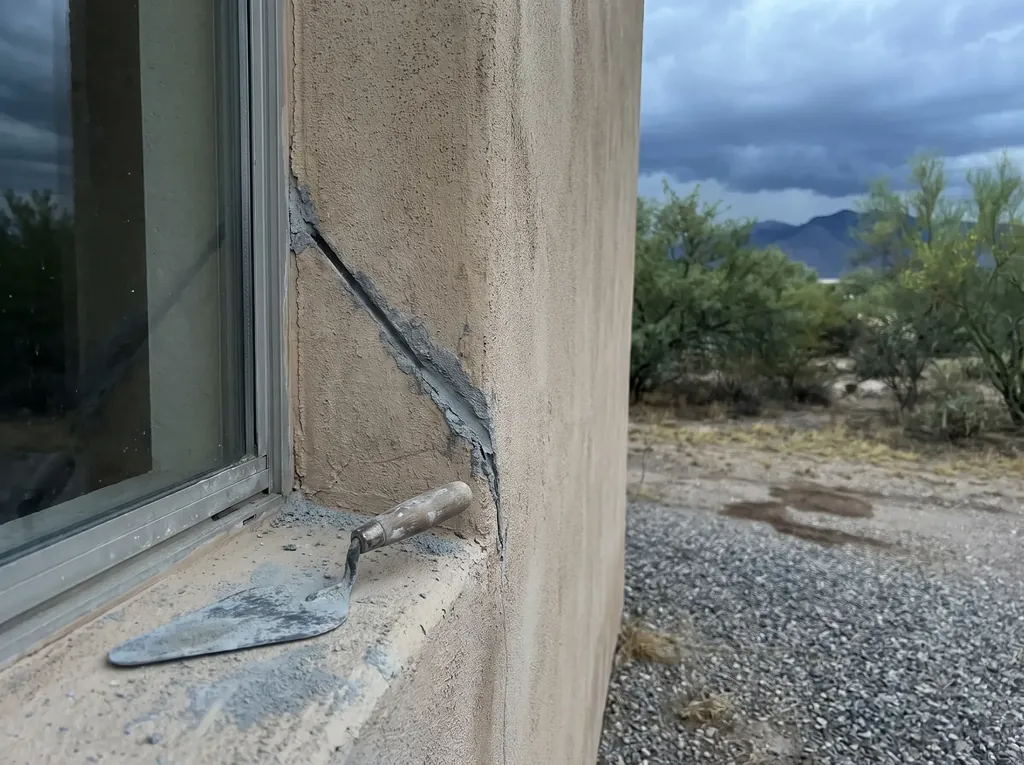
Hairline, window corner and settlement cracks diagnosed first, then routed, filled or rebuilt according to what is actually causing them.
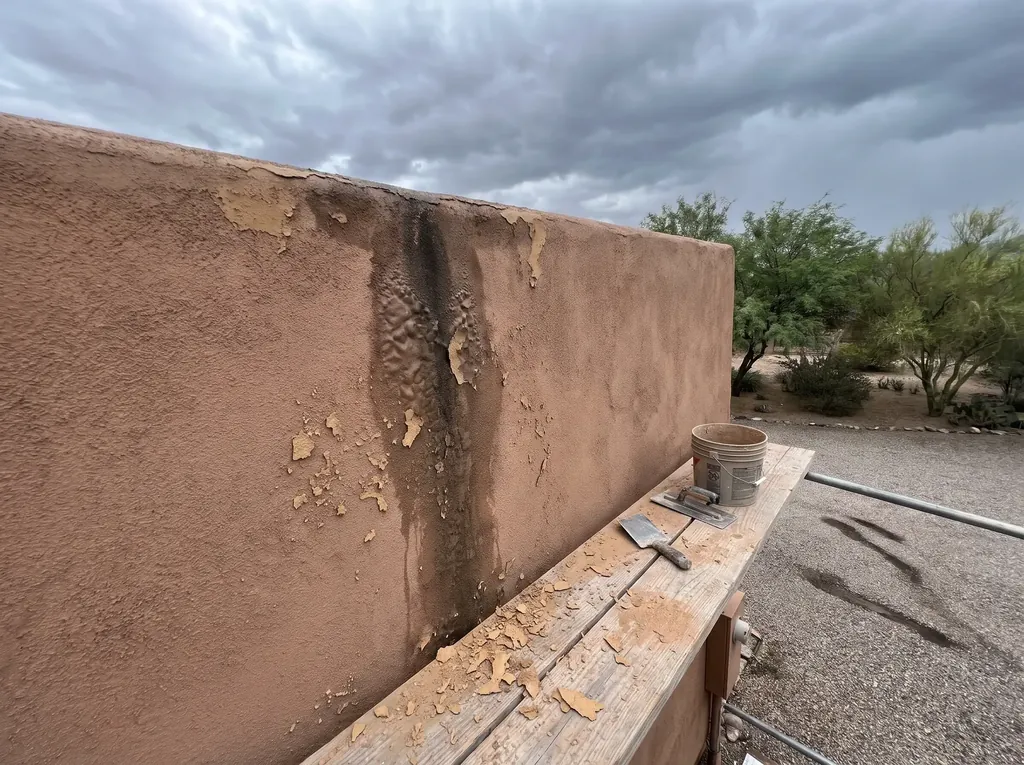
Stains, bubbling and crumbling stucco traced to the source, with parapet caps and roof transitions corrected before the wall is rebuilt.
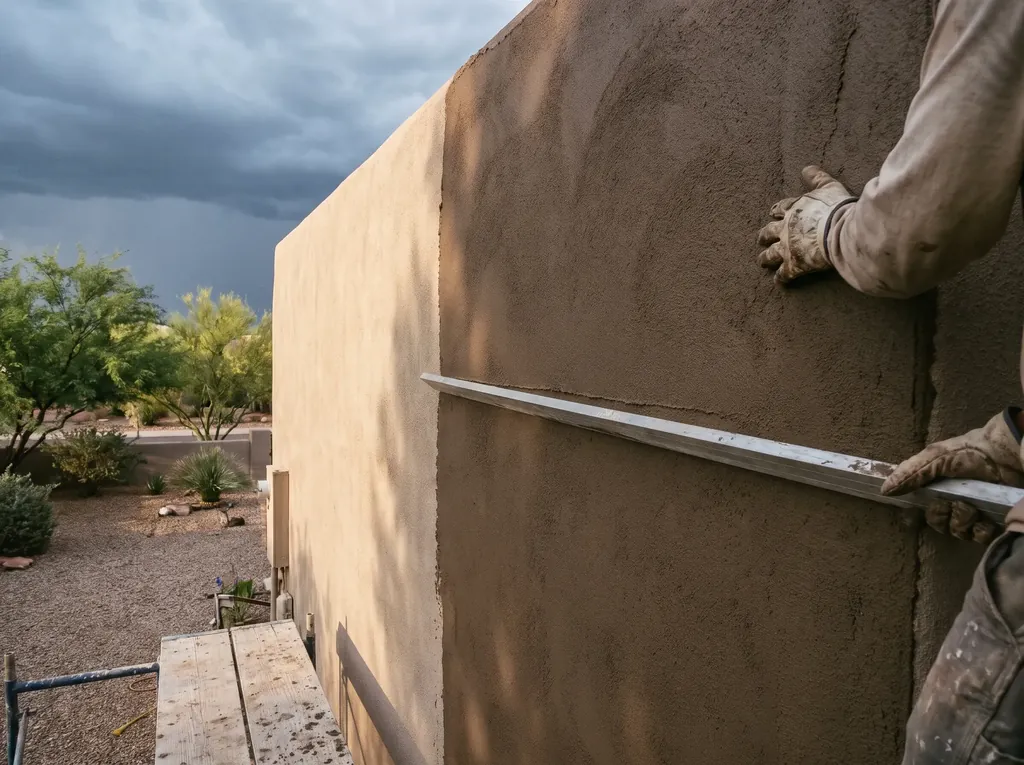
When patches stop making sense, failed stucco is removed or resurfaced and the whole elevation gets a new, even finish.
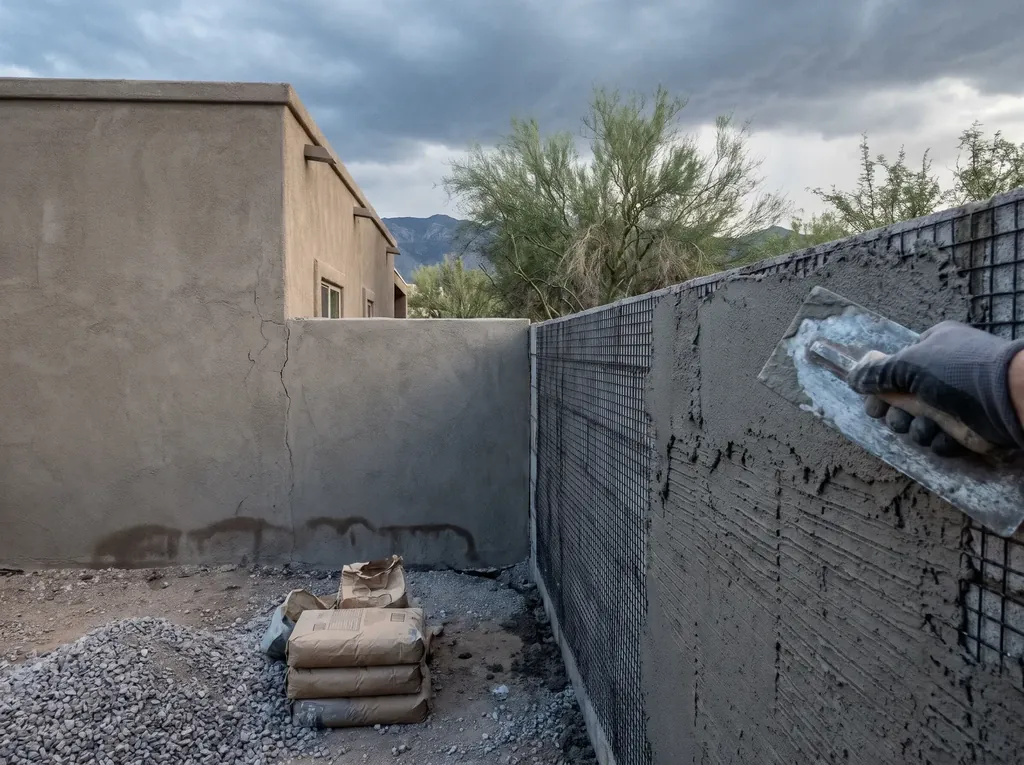
Three coat and one coat systems for additions, garden walls and exterior upgrades, tied properly into existing surfaces.
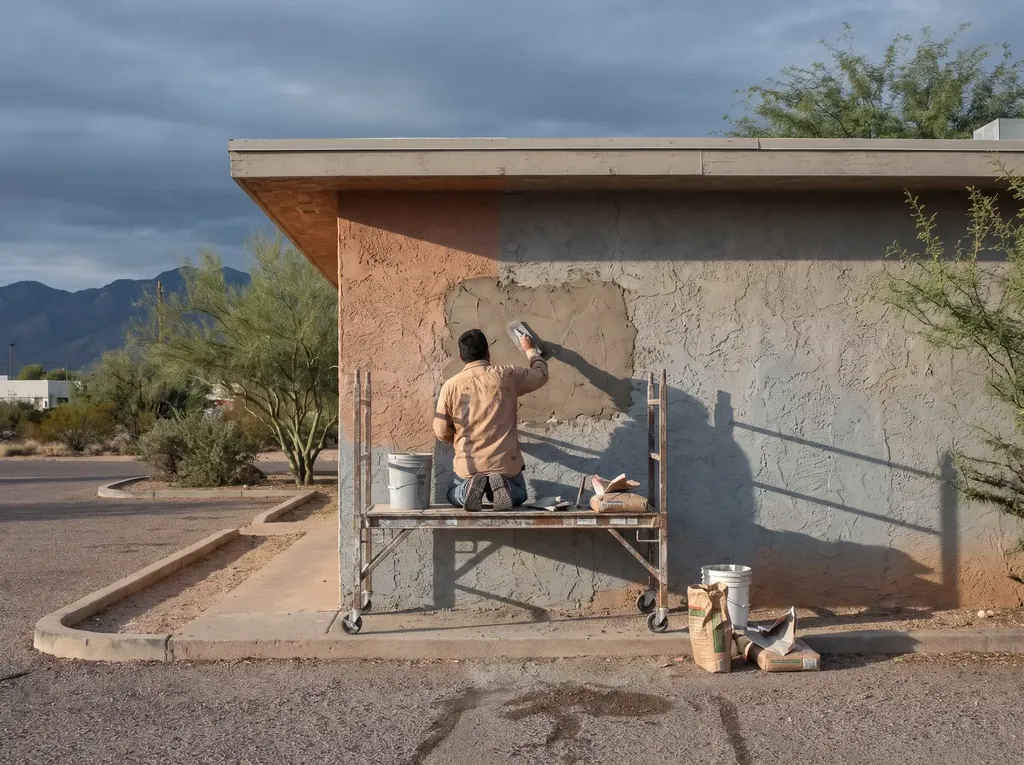
Repairs and recoats for retail, office, multifamily and HOA properties, scheduled around tenants with one written scope.
Tell us about your walls, what is on them now and what you would like to see. We will call you back to arrange a look.
We will call you back to arrange a look at the wall. If you would rather talk now, call(520) 555-0171.
Nothing was sent. Please call (520) 555-0171 and we will arrange a look at the wall.