Widespread loss of bond
Large hollow areas, bulges and sections that move when pushed. New finish over loose stucco comes down with what is under it, so these areas get removed back to sound material or to the substrate.
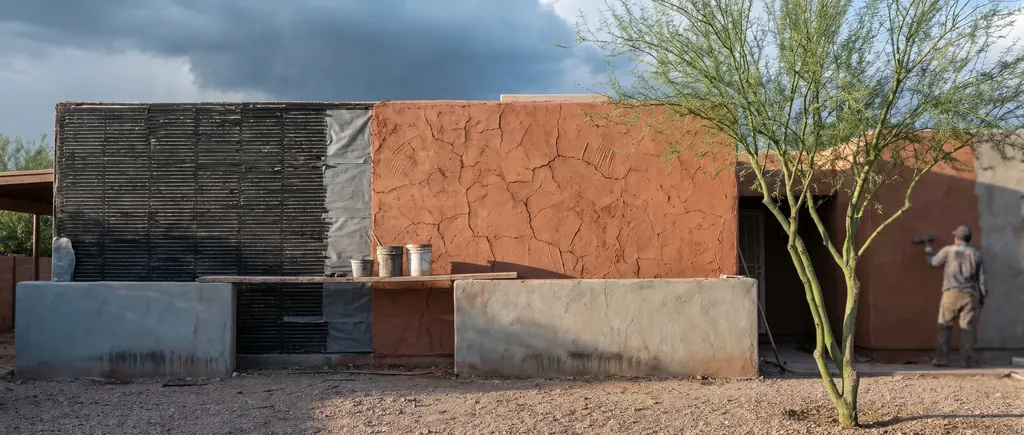
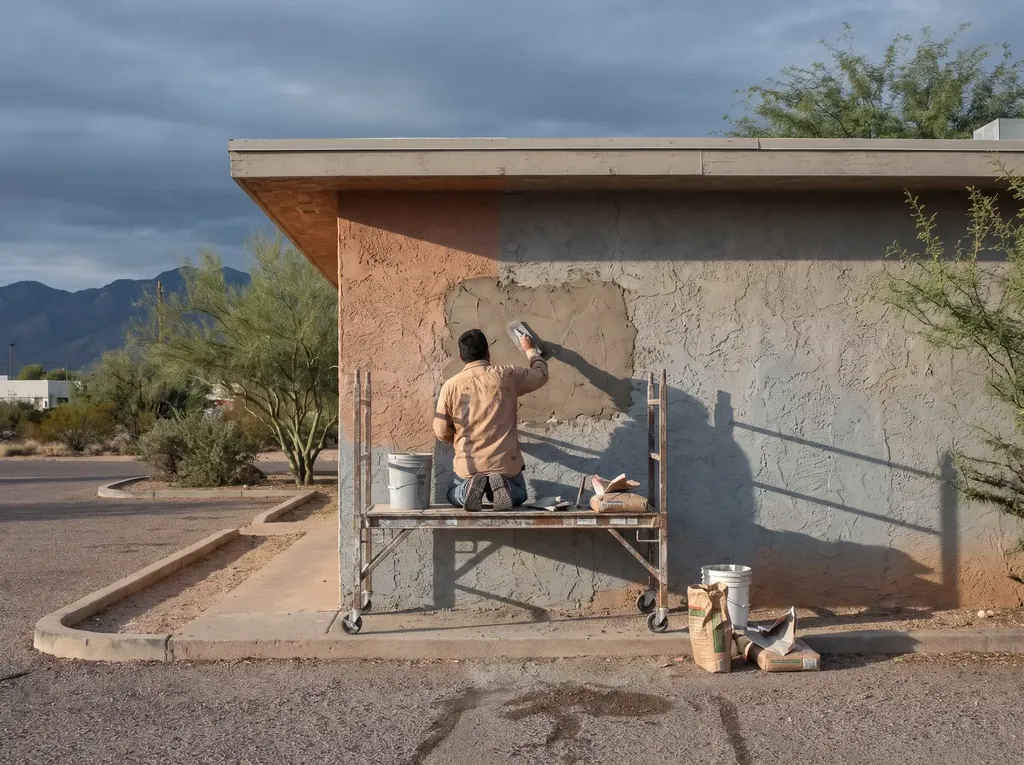
Your wall has patches on its patches, and every one of them shows. When repair has stopped being the honest answer, we can remove or resurface what has failed and give the whole elevation one new, even finish.
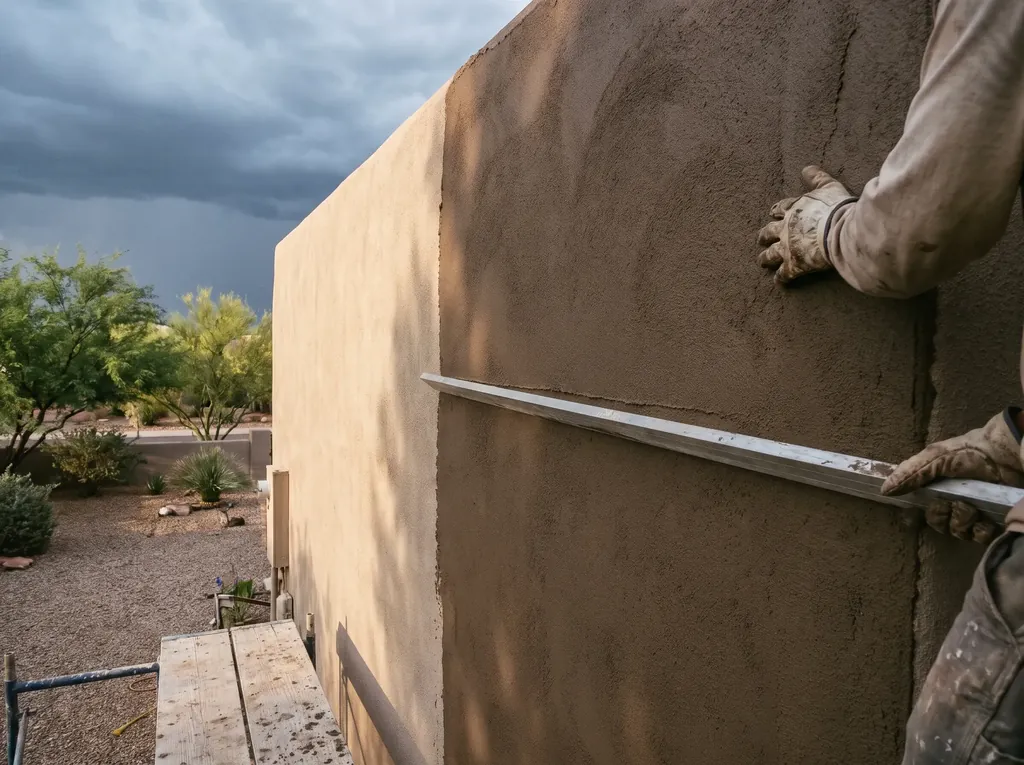
We are a repair first company, so we start with the question most people selling re-stucco skip: do you actually need it? A faded wall does not. A wall with a few cracks does not. Those are usually better served by targeted repairs and a recoat, for a good deal less money.
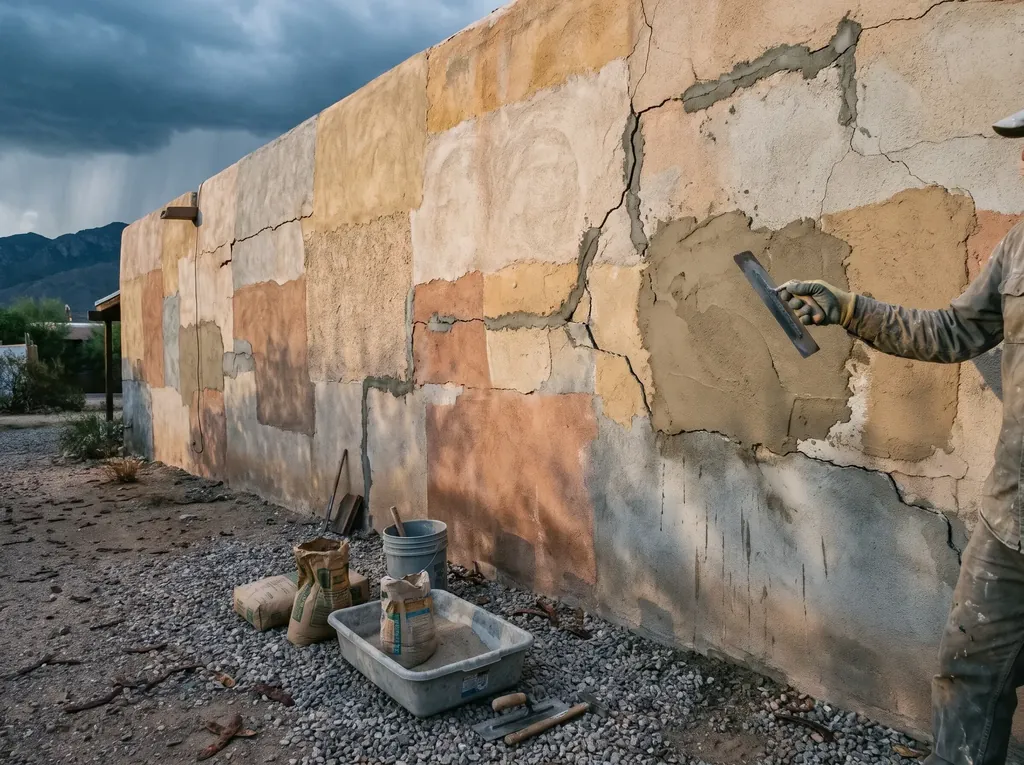
Some walls really are past that point, though. Tap across a section and it sounds hollow for yards at a time. Old patches have multiplied until there is more repair than wall, each one a different color and texture. Water has rusted the lath along a whole elevation, or decades of paint and coatings have started peeling away in sheets and taking the finish with them. In older central Tucson neighborhoods, it is not unusual for cement stucco to carry a long history of well meant fixes.
At that stage, continuing to patch means paying for a series of small jobs on a wall that keeps finding new ways to fail. A one time, properly planned re-stucco can be the better use of your money. There are two main routes, resurfacing over the existing stucco where it is still bonded and sound, or tearing off down to the substrate where it is not. Which one you need depends on the wall, and you can often mix the two on the same house.
Large hollow areas, bulges and sections that move when pushed. New finish over loose stucco comes down with what is under it, so these areas get removed back to sound material or to the substrate.
Years of mismatched repairs, ridged edges and shiny caulk lines. If the stucco is sound beneath them, a new finish over a proper base coat can give you one continuous wall again without a full tear off.
Peeling or blistered film over a wall that can no longer dry. New stucco products will not bond to a failing coating, so it has to come off, or the surface has to be prepared with a system made for it.
We tap across the walls in a grid rather than just around the obvious damage, and mark what is hollow. This is usually what settles the question between resurfacing, removing and simply repairing.
We look at whether the wall is bare stucco, painted or covered in an elastomeric coating, since that decides how anything new can bond. Painted surfaces take extra preparation or a mechanical key.
We check parapets, weep screeds, window details, soil lines and irrigation. Re-stucco is the one good chance to fix these details, and it would be a waste to reproduce them under a new finish.
Where it is realistic, we will lay out targeted repair, resurfacing and full removal side by side, so you can see what each one solves, what it leaves alone and why we lean the way we do.
You may not need every elevation done. We set out which walls get what, how they meet each other, and any permit or HOA question you may need to check first. Requirements depend on the scope and where you live.
Windows, doors, fixtures, plants and gravel get covered. Tear off is loud and dusty, so we plan the work with you and keep the mess contained as far as a job like this allows.
Hollow stucco and failed coatings come off. Where we go down to the substrate on a framed wall, new paper, lath, corner bead, weep screed and control joints go in, which also corrects old details that caused trouble.
Sound existing stucco gets cleaned and given a bonding treatment, with mesh or lath where needed, then a new base coat. Stripped sections get scratch and brown coats. Everything is brought to one plane, so the old transitions do not telegraph through.
Cement cures by holding water, not losing it. Summer heat and dry air can pull it out too fast and cause cracking, so we mist, shade and schedule around the sun, and plan around monsoon storms when they threaten fresh work.
The finish coat runs continuously from one natural break to the next, in the texture and color you have chosen, with HOA colors confirmed in advance if that applies to you. Working this way avoids cold joints and lap marks on the wall.
A company that mostly sells re-stucco tends to see re-stucco on every wall. We spend most of our time trying to save stucco, so if we tell you yours is done, we can show you why. We will tap the wall with you, point to the hollow sections, and explain what would happen if you patched instead. You should be able to follow the reasoning without taking our word for it.
We also treat a re-stucco as a chance to correct what caused the failure. Getting a beautiful new skin on a wall with a cracked parapet cap or a buried weep screed just restarts the clock. The details at the top and bottom of a wall are what decide how long the new finish lasts, and that is where we spend the extra attention.
And we keep the scope honest. If your south and west walls are finished while the north wall has years left, we will say so. You can do the worst walls now and plan the rest, as long as you understand how the new work will sit next to the old.
Send us photos of the worst wall and tell us what has been done to it over the years. We will give you our honest first read.
Yes, if the existing stucco is still firmly bonded and the surface is properly prepared. Clean, unpainted, sound stucco is the best candidate. Painted or coated walls need extra preparation, and any hollow or loose areas have to come off first. New stucco over loose stucco fails along with it.
It can, but not by itself. Old stucco is often dusty, dry and sometimes painted, and new material will not grab that surface reliably. Cleaning it, dampening it, and using a bonding agent or a mechanical key such as lath is what makes the bond last.
If the stucco is sound and the problem is fading or chalking, paint or a recoat is usually the better value. Re-stucco is for walls with widespread hollow areas, heavy patching, or a surface too worn for a coating to fix. Paint will not reattach loose stucco, and it will not hide a patchwork for long.
Rarely, if it is built and maintained properly. Well bonded cement stucco can go for decades without a full re-stucco, with crack repairs and a recoat along the way. There is no set schedule. In Tucson, the south and west walls and parapets usually show their age first.
It depends on the wall area, height and access, whether old stucco has to be torn off and hauled away or can stay, how much paper and lath needs replacing, the finish you choose, and any repairs to parapets or framing that turn up along the way. Resurfacing and full removal are very different jobs. We give you a written number for your walls after we have sounded them.
Repair when the damage is local and the rest of the wall is bonded. Replace or resurface when hollow sections are widespread, the lath has rusted across an elevation, or you are repeatedly paying to patch the same wall. Often the best answer is both: repair the sound walls and redo the worst ones.
We take on re-stucco and restoration work across Tucson, Oro Valley, Catalina Foothills, Marana, Sahuarita, Casas Adobes, Vail and Green Valley.
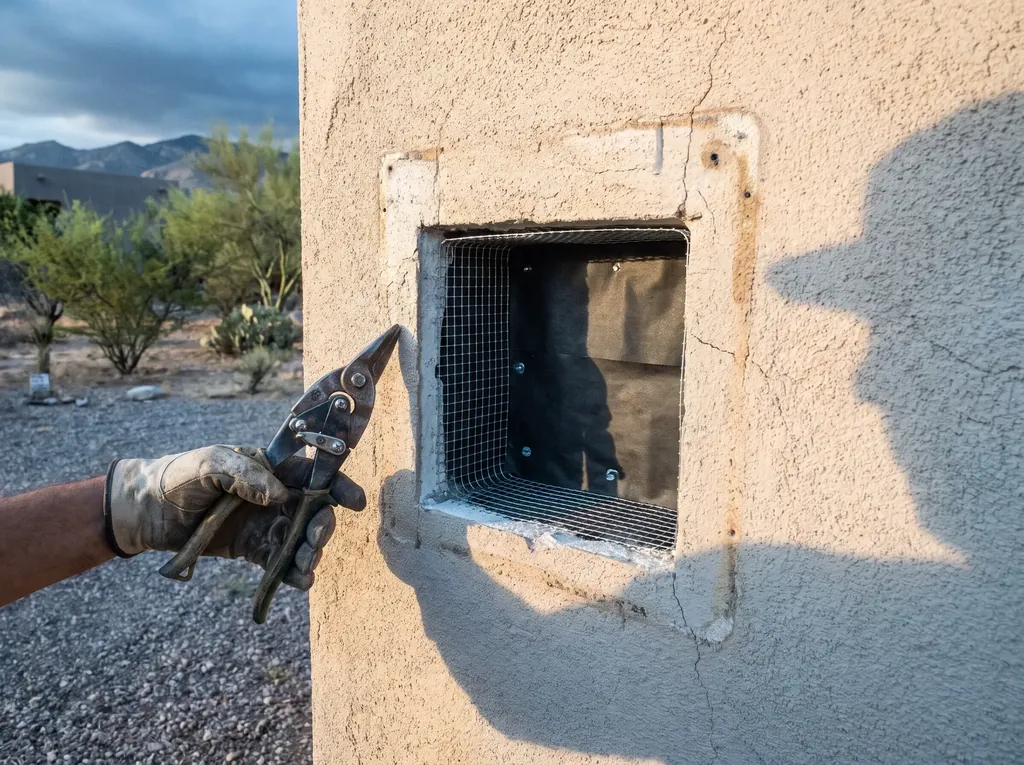
Holes, impact damage, removed fixtures and failed old patches rebuilt in layers, then textured to blend with the wall around them.
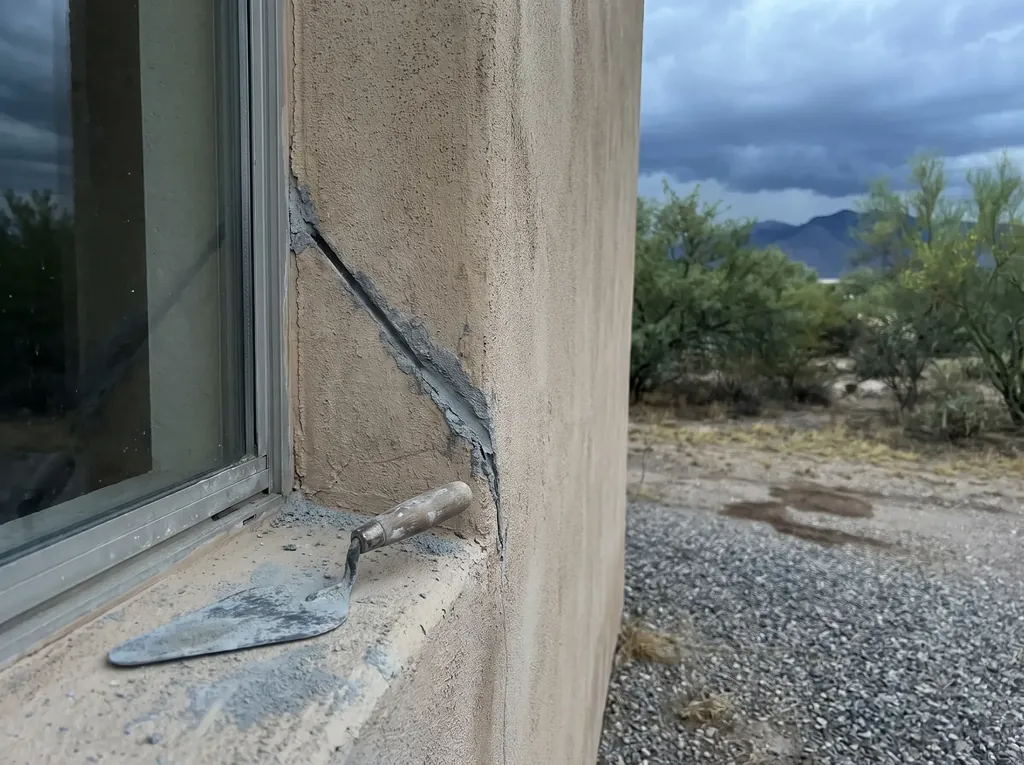
Hairline, window corner and settlement cracks diagnosed first, then routed, filled or rebuilt according to what is actually causing them.
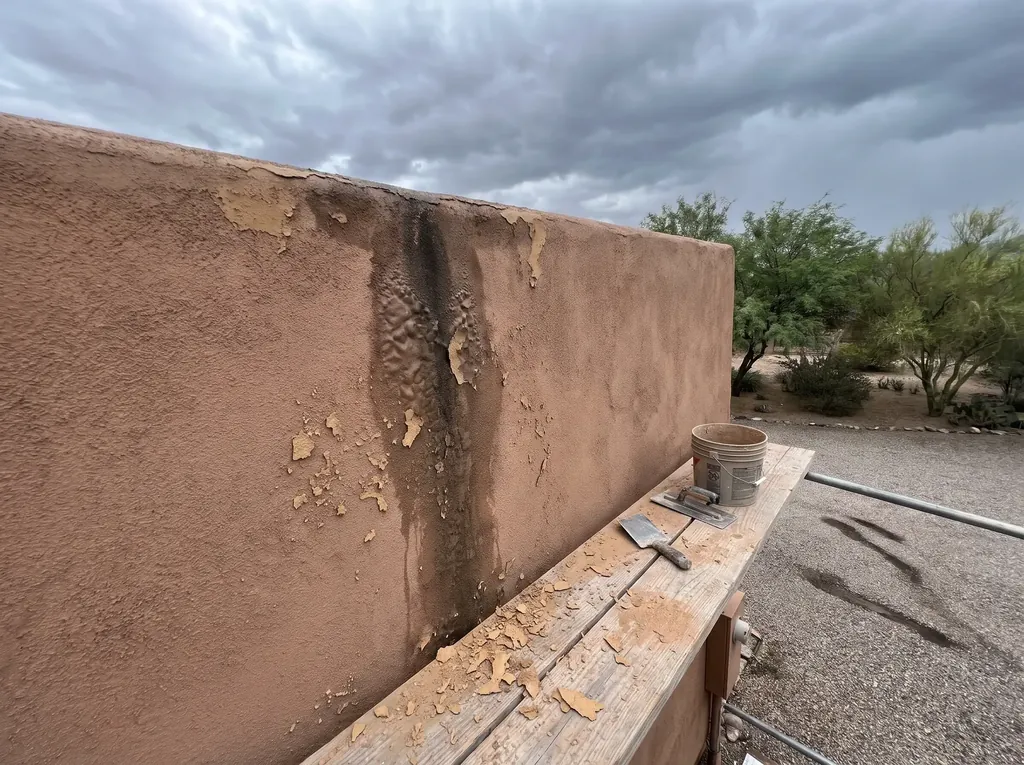
Stains, bubbling and crumbling stucco traced to the source, with parapet caps and roof transitions corrected before the wall is rebuilt.
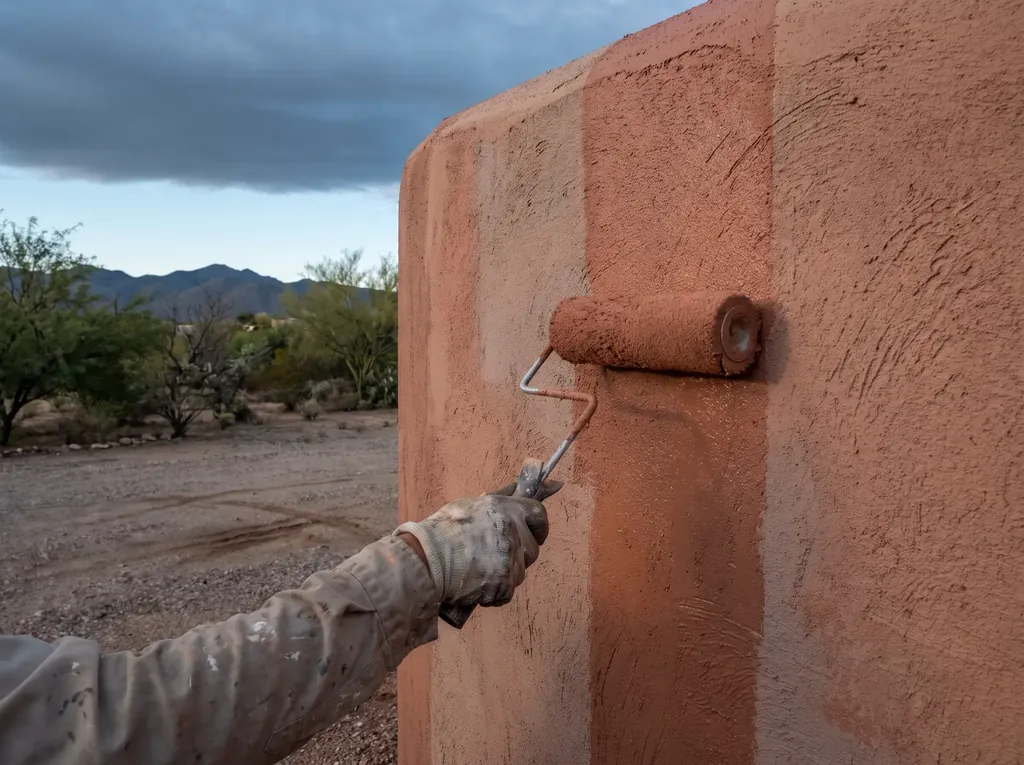
Prep, crack treatment and coatings that suit Tucson sun, including elastomeric systems when the wall and the budget call for them.
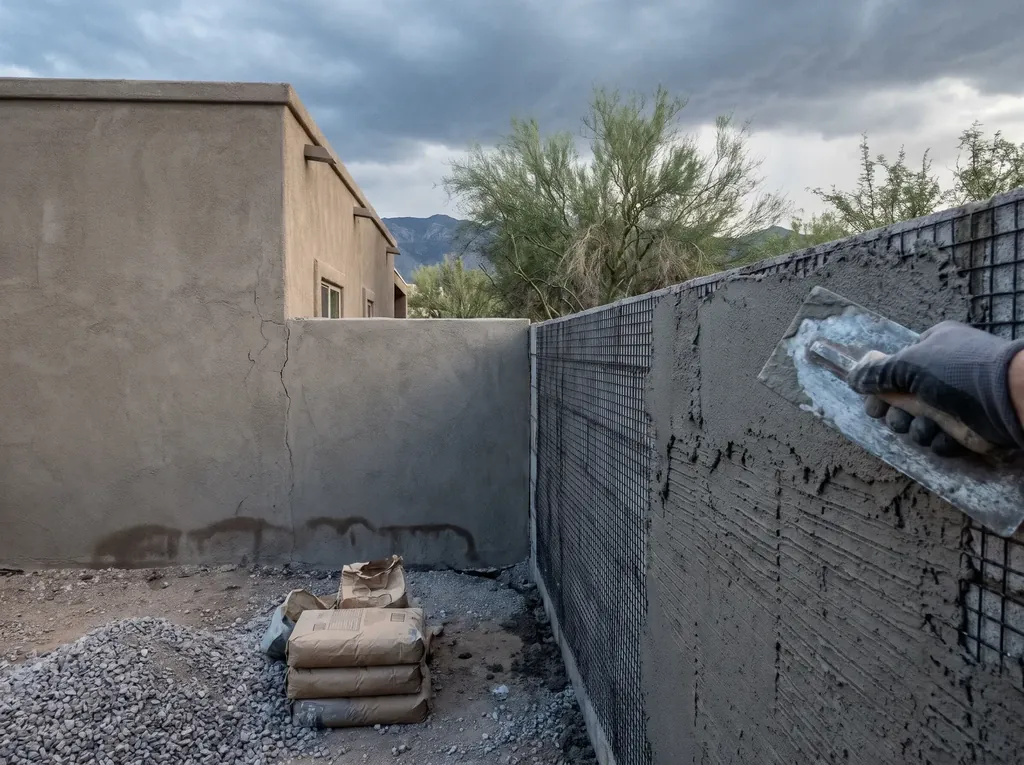
Three coat and one coat systems for additions, garden walls and exterior upgrades, tied properly into existing surfaces.
Repairs and recoats for retail, office, multifamily and HOA properties, scheduled around tenants with one written scope.
Tell us about the wall, what has been done to it, and what is bothering you. We will call you back to arrange a look, and you may find you need less than you thought.
We will call you back to arrange a look at the wall. If you would rather talk now, call(520) 555-0171.
Nothing was sent. Please call (520) 555-0171 and we will arrange a look at the wall.