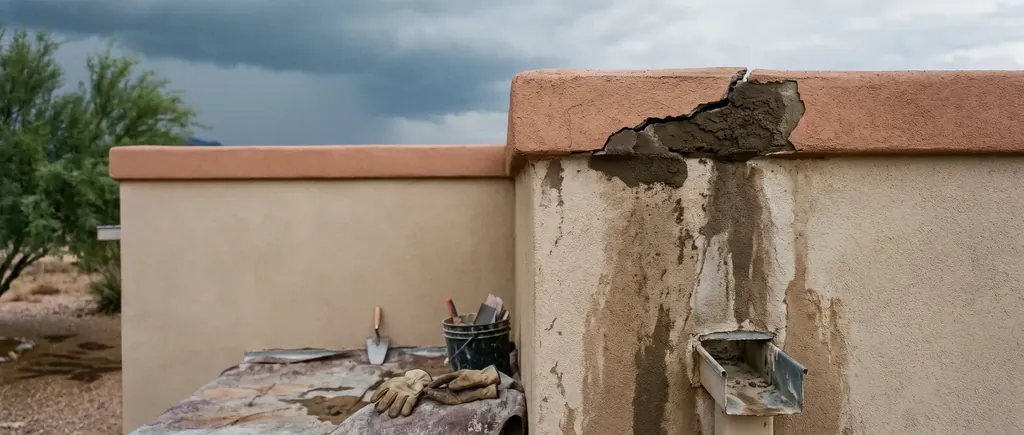
Stained, crumbling stucco beneath a parapet on a flat roofed home under a monsoon sky

Stucco Water Damage and Parapet Repair in Tucson

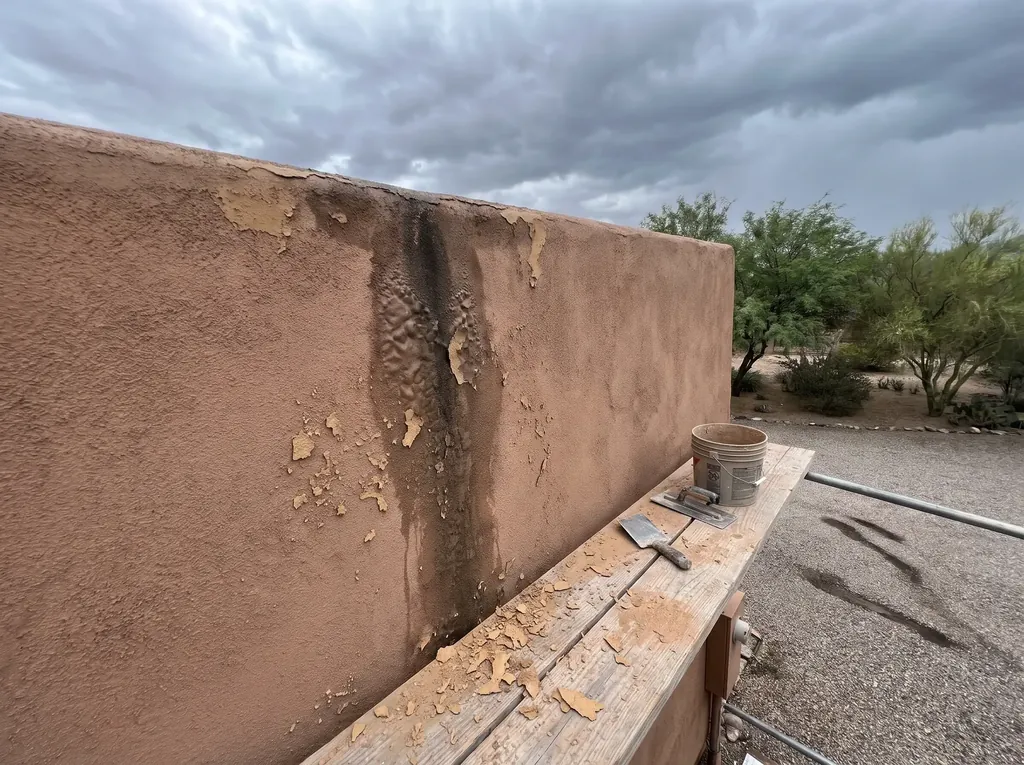
A brown stain under the roofline. Paint bubbling after the first big storm. Stucco that crumbles when you touch it. The mark on the wall is rarely where the water got in, so we find the source before anyone rebuilds anything.

  • Water traced to its source first
  • Parapet caps and transitions checked from above
  • Wet paper and rusted lath replaced, not covered
  • Breathable materials on walls that need to dry
Dark water stain and bubbled finish below the parapet of a flat roofed stucco home

In a dry climate, water damage hides well

It rains very little in Tucson, and then it rains sideways. Monsoon storms push water hard against walls that have spent months baking and cracking, and it gets into openings no ordinary shower would ever reach. Afterward the surface dries out in a day. Behind it, the building paper, lath and any wood framing can stay wet far longer. By the time you see a stain or a blister, the damage has often been working for more than one season.

Flat roofed homes make this especially common. Santa Fe and Territorial houses carry parapets, the short walls that rise above the roof line. A parapet has stucco on both sides and a top that faces straight up at the sky. That top is the hardest working surface on the house. When a cap cracks, water drops into the wall from above and runs down inside it, and the stain may appear several feet below, or even on an interior ceiling.

Water also comes up from the bottom. Sprinklers and drip lines keep the base of a wall damp, soil and gravel get piled over the weep screed, and the moisture that is supposed to drain out has nowhere to go. Knowing which of these is happening is the entire job. Rebuilding a wall without fixing the source just gives the water a clean new place to do the same thing again.

Where water gets into Tucson stucco

Parapets and roof transitions

Cracked caps, failed coping, roof membrane that has pulled away from the wall, and clogged or leaking scuppers and canales. We correct the top of the wall, or tell you when part of it needs a roofer, before rebuilding below it.
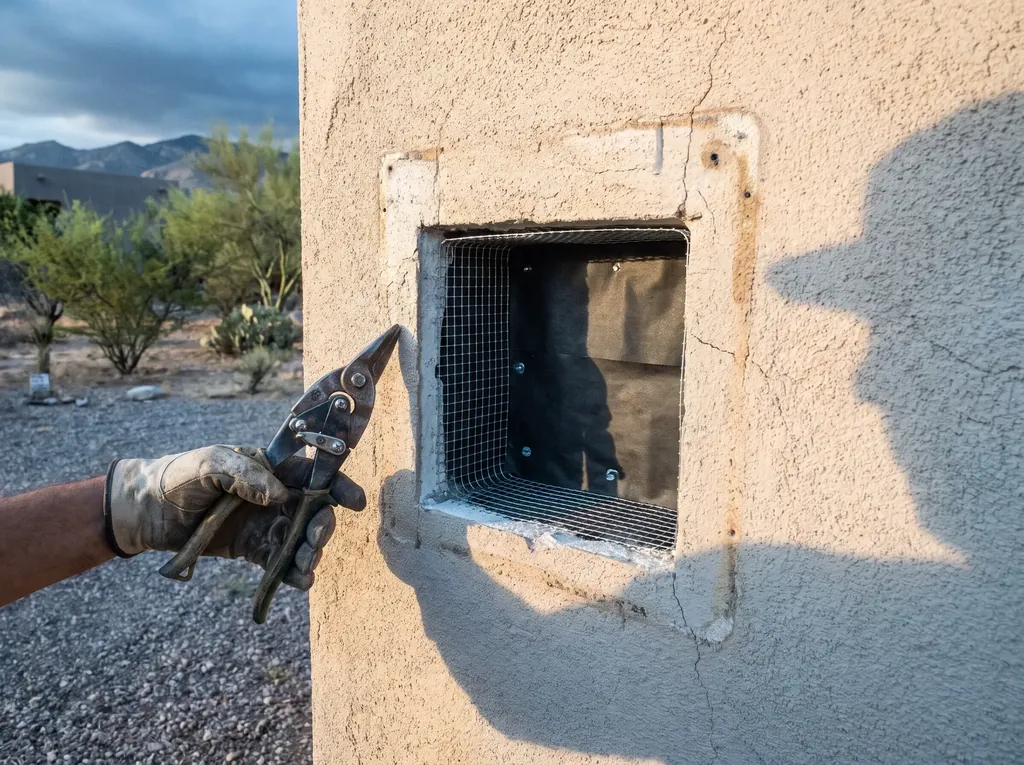
Stains, bubbling and crumbling walls

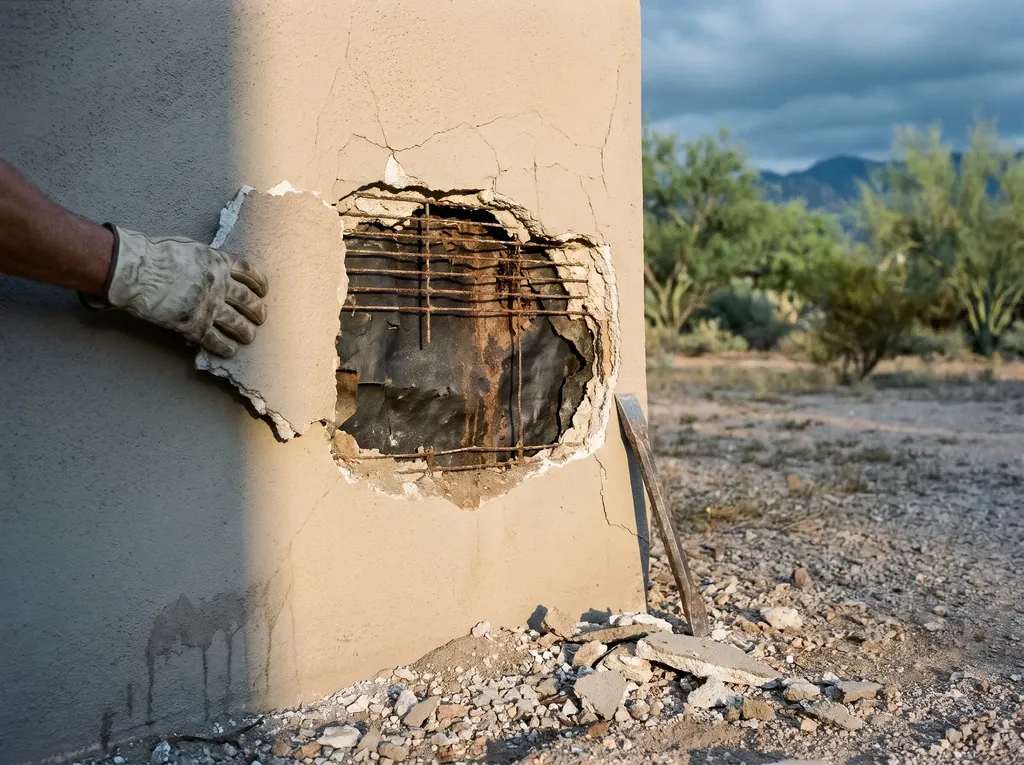
Tide marks, white mineral deposits, blistered paint and soft stucco. We open up what has failed, replace wet paper and rusted lath, and rebuild in layers to match the wall.

The base of the wall

Overspray, buried weep screeds, planters against the wall and grade that drains toward the house. Damp bases crumble and stain. We repair the stucco and show you what has to change around it so it stays repaired.

How we trace a water problem

Reading the pattern on the wall

Stains have a shape. A streak from a corner points to a scupper or cap joint. A band at the base points to irrigation or grade. We map what we see and how it changes after rain, from your memory and any photos you have.

Sounding and checking for moisture

We tap the wall to find where stucco has lost its bond, and check suspect areas for moisture rather than relying on looks. The hollow area is often larger than the visible stain.

A look from above and below

We check parapet caps, joints, roof to wall transitions and drains, then the weep screed, soil line and sprinklers at the bottom of the wall. Many jobs turn out to be one of these rather than the wall itself.

A plain account of what we found

You get the likely source, what has been damaged, what we would repair, and what falls to someone else, such as a roofer or a plumber. If we cannot be sure without opening the wall, we will tell you that as well.

Damaged stucco opened up to show rusted wire lath and dark, water stained building paper

How we repair stucco water damage

  1. Find and confirm the entry point

    We work from the stain back to the source and test our thinking where we can. Nothing gets rebuilt until there is a believable answer for how the water is getting in.

  2. Fix the path

    That can mean rebuilding or capping a parapet top, sealing joints, correcting a wall to roof detail, clearing a buried weep screed, or moving irrigation away from the wall. Some of this may need a roofer, and we will tell you where the line sits.

  3. Open up the damage

    We remove stucco until we reach dry, firmly bonded material. Often that goes further than expected. It is better to find that now than to bury it under a new finish.

  4. Let it dry and replace what is wet

    Wet sheathing or framing needs to dry, and any rot needs repair by the right trade. New building paper goes in lapped so water sheds down and out, with new lath and a clear weep at the base.

  5. Rebuild the wall in layers

    Scratch, brown and finish coats go back in the same logic the wall was built with, cured properly between coats. We slope and detail parapet tops so that water runs off them rather than sitting.

  6. Finish with something that breathes

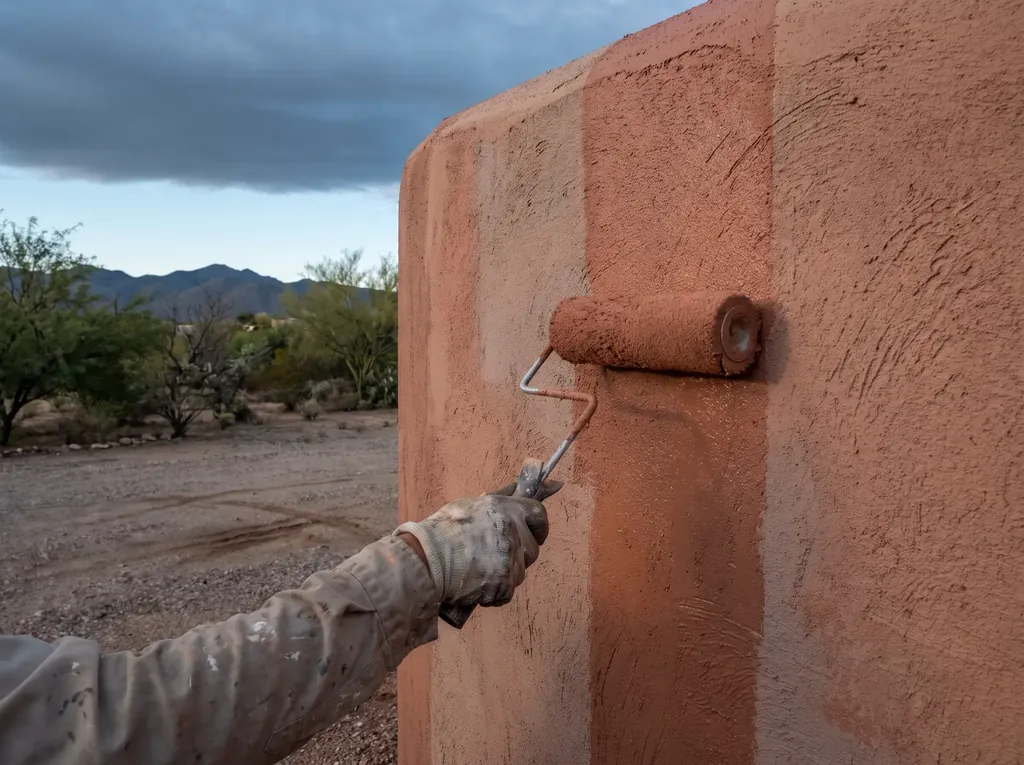
    We match the texture and bring the color together, using a finish that lets the wall dry out. Sealing a damp wall behind a tight film is one of the most common ways to turn a small leak into a large one.

Why stop at the stain when you can stop the water?

Stucco water damage is often repaired more than once. The stain gets painted, the stucco gets patched, and two monsoons later the same mark comes back in the same spot. That tells you the visible damage was repaired and the entry point was not.

We go to the top of the wall and the bottom of the wall before we spend your money in the middle. We are also honest that water tracing is not always certain. Some leaks reveal themselves only when a section is opened or after the next storm, and we will not pretend otherwise. If you need someone other than us, like a roofer for the membrane, a plumber for a line in the wall, or a mold specialist for growth indoors, we will tell you.

We also pay attention to what goes back on the wall. Cement stucco can absorb a little moisture and let it out again, and that ability to dry is worth protecting. A heavy coating can look like the safe option, but on a wall with a moisture history, it can trap water and blister.

Seeing a stain after the last storm?

Take a photo now, before it dries and fades, and tell us when it appeared. We will help you work out what it means.

Stucco water damage and parapet questions

What can I do if water is coming through my stucco wall?

First, turn off any irrigation near that wall and clear debris from roof drains if you can do it safely. Move belongings away, photograph what you see, and note when it happened. If water is near electrical fixtures or the service panel, keep clear and call an electrician. Then have the source traced before the wall gets painted or patched, since sealing it too early can trap the water.

Can mold grow behind stucco?

Yes. Mold needs moisture and something organic to feed on, and wet building paper, sheathing and framing behind stucco can provide both. It is less common in our dry climate than in humid regions, but a persistent leak creates its own damp conditions. If you see or smell mold inside the house, talk to a mold specialist. We repair the stucco and the water path, not indoor mold.

What are common problems with parapet walls?

Cracks in the top surface, failed caps and coping, joints that have opened up, roofing that has pulled away from the inside face, blocked scuppers, and stucco that has come loose from water running inside the wall. Parapets are exposed to sun and weather on three sides, and in Tucson, those stresses show up quickly.

What is a parapet capping?

The cap, sometimes called coping, is whatever covers the top of a parapet. On Southwest homes, it is often stucco shaped over the wall, sometimes with a sealed or roofing product on top, and on other buildings it is metal, tile or precast. Its job is to shed water and stop it from dropping into the wall below.

How to seal top of parapet wall?

Start by repairing any cracks and loose material, as sealing over them only hides the problem. Then the top gets a sloped surface so water runs toward the roof, with a suitable waterproof coating or a metal cap with sealed joints, tied in properly to the roofing on the inside. The right choice depends on the wall and the roof, and it is one of the places where a roofer and a stucco repair need to agree.

Should stucco touch the ground?

No. Stucco that stays in contact with soil or paving wicks up moisture and tends to stain and crumble at the base. On framed walls, a metal weep screed at the bottom lets water drain out, and it needs to stay clear of soil and gravel. If yours is buried, that is worth fixing even when the wall looks fine.

Will homeowners insurance cover stucco damage?

Coverage comes down to your policy and the cause. In general, sudden events may be treated differently from slow leaks, wear or lack of maintenance, and wording varies among policies. Check your own policy and ask your insurer. Keep your photos and dates, because they will help whichever way the answer goes.

Related stucco work

Square cut hole in a stucco wall with new wire lath fitted, ready for a patch

Stucco Patching and Hole Repair

Holes, impact damage, removed fixtures and failed old patches rebuilt in layers, then textured to blend with the wall around them.

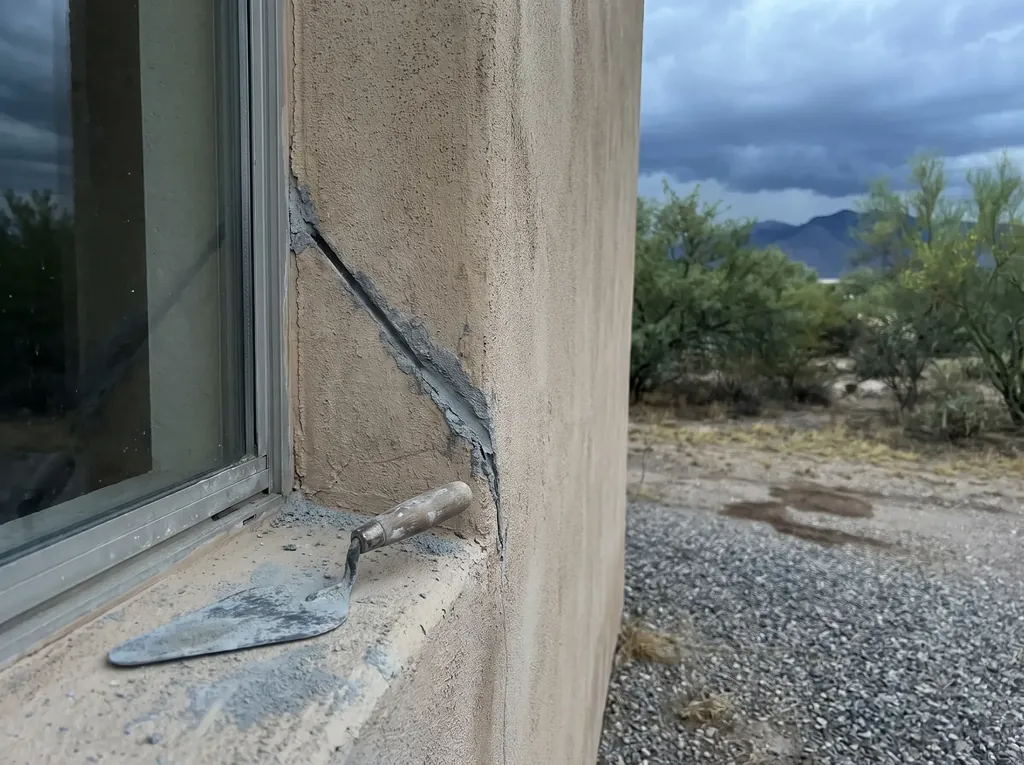
Stucco crack routed open at a window corner, ready to be filled

Stucco Crack Repair

Hairline, window corner and settlement cracks diagnosed first, then routed, filled or rebuilt according to what is actually causing them.

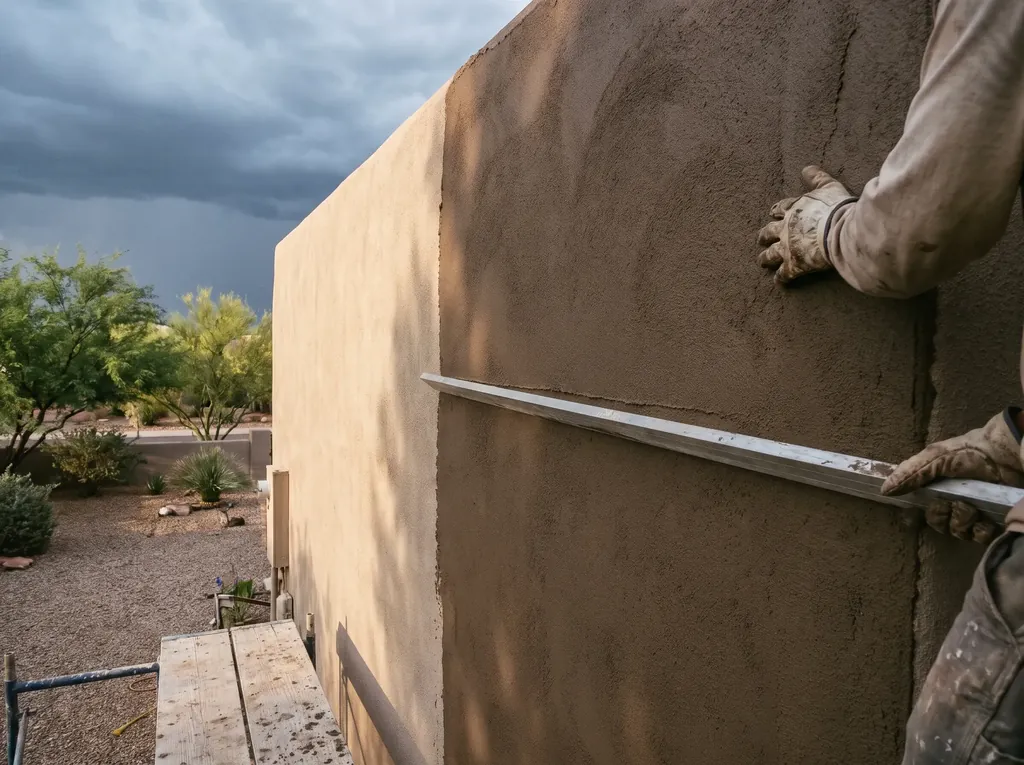
Fresh brown coat of stucco being floated across a full wall of a territorial style home

Re-Stucco and Stucco Restoration

When patches stop making sense, failed stucco is removed or resurfaced and the whole elevation gets a new, even finish.

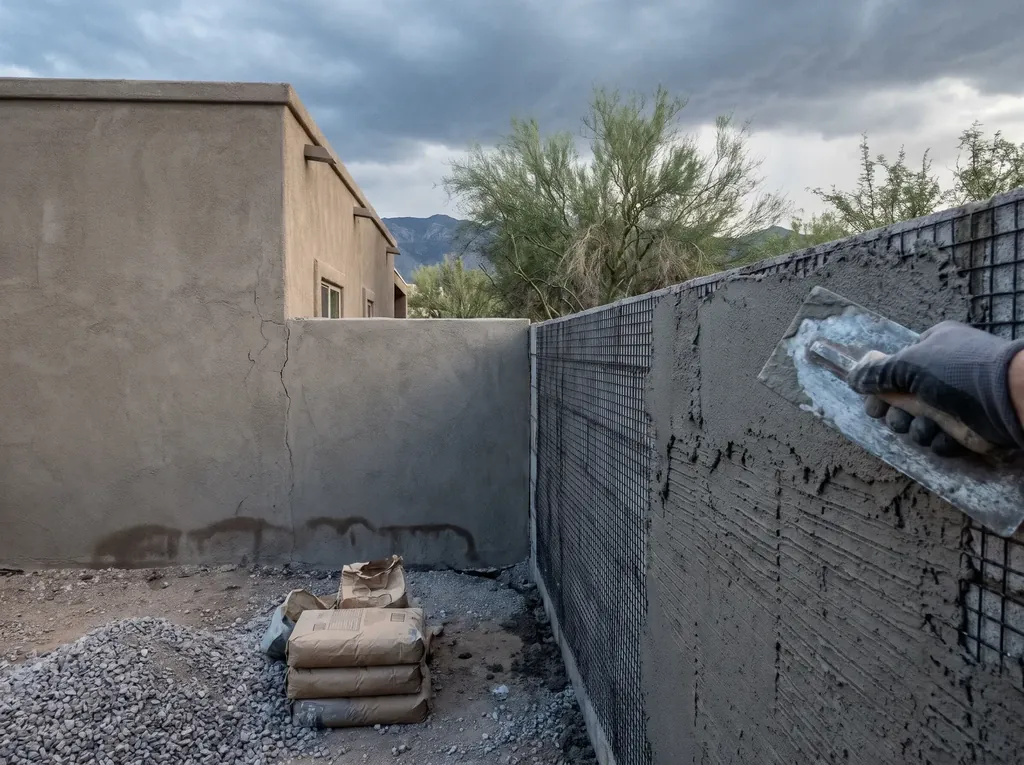
Scratch coat of new stucco being applied over wire lath on a garden wall addition

New Stucco Installation

Three coat and one coat systems for additions, garden walls and exterior upgrades, tied properly into existing surfaces.

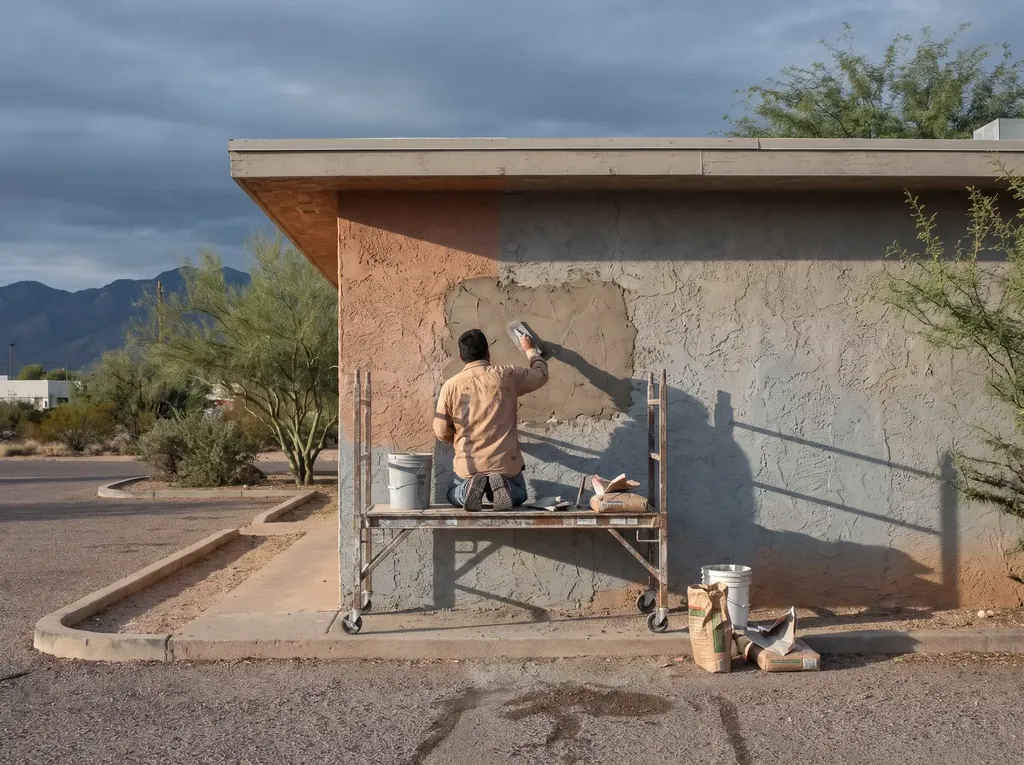
Worker on a low scaffold repairing the stucco wall of a small desert retail building

Commercial Stucco Repair

Repairs and recoats for retail, office, multifamily and HOA properties, scheduled around tenants with one written scope.

Get water damage looked at before the next storm

Tell us where the stain or damage is, when you first saw it, and whether it changes after rain. Photos help. We will call you back to arrange a look.

Where is the damage, when did you first notice it, and does it change after rain? Photos can follow once we talk.

Our Privacy Policy explains how your request is handled and who it is shared with. Our Terms of Service apply.