Holes and removed fixtures
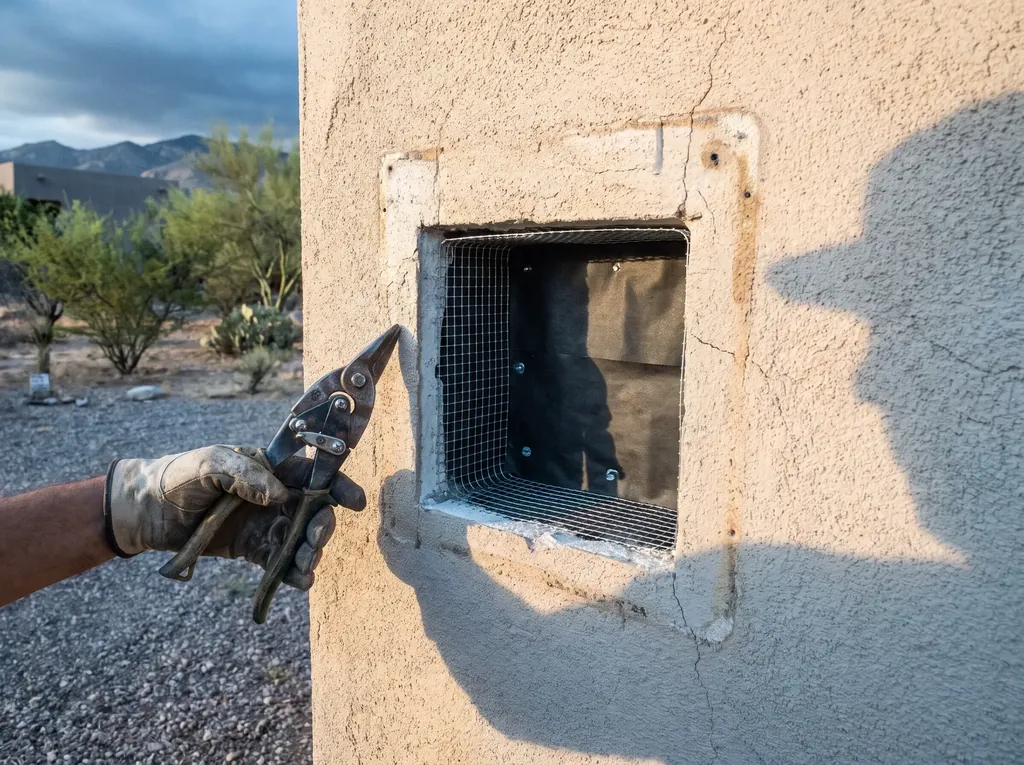
Openings left by old lights, vents, conduit, dish mounts, hose bibs and hooks. These are often small, but the fasteners behind them have usually let water in for years, so we check what is under the edges.
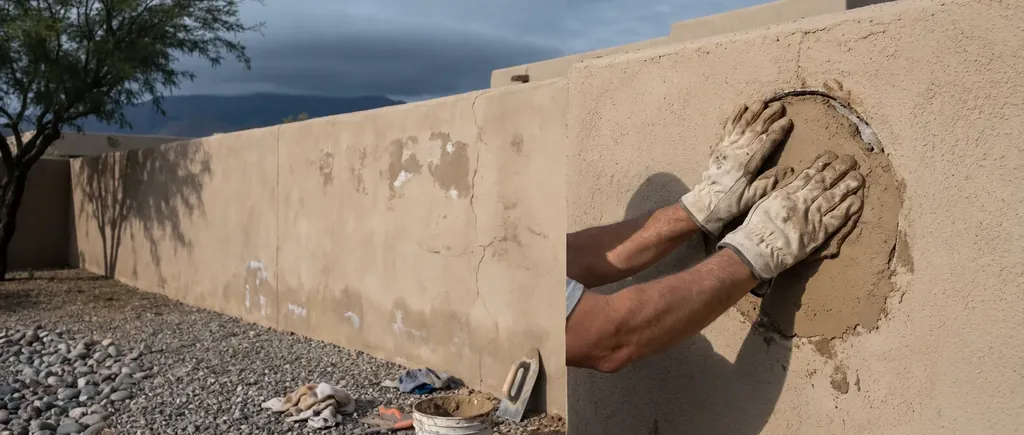
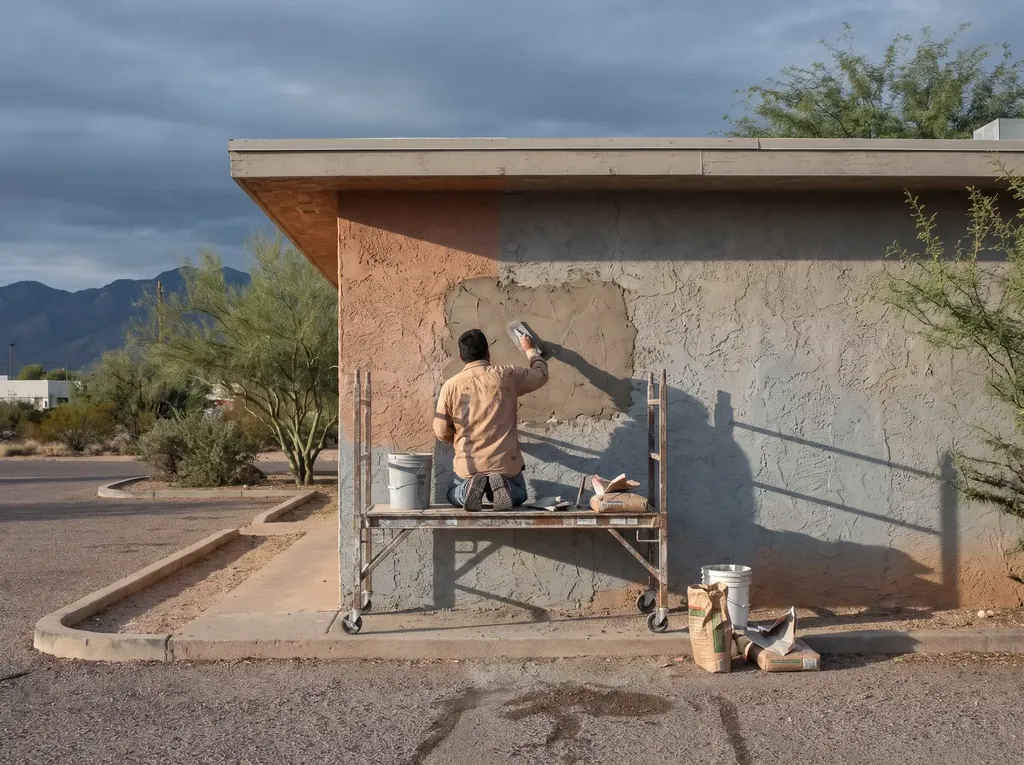
A hole where the satellite dish used to be. A corner the truck clipped. A patch from years ago that still looks like a patch. We rebuild the damage in layers and work the texture until your eye stops finding it.
Holes end up in stucco for ordinary reasons. Someone took down a light, a hose reel or an old cable box. A ladder slipped. A car door or a lawn crew found the corner of a wall. Sometimes a section just lets go and you find it in pieces on the gravel. Whatever the cause, you now have an opening in the skin that keeps the desert out of your house.
That matters in Tucson. A monsoon storm throws rain sideways, and an open hole sends it straight at the paper and lath behind the stucco. Pack rats and bees are always looking for a dry cavity, and a gap the size of your thumb is enough for bees to move into a wall. Leave a hole through one summer and the repair usually gets bigger, not smaller.
The other half of the job is how it looks. A patch done with a bucket of premix and a flat trowel will keep out some of the weather, but it will read as a smooth grey scar on your wall for years. Stucco patching is part structure and part hand craft. Done properly, the layers underneath match what the wall was built with, and the surface matches what the wall has become.
Openings left by old lights, vents, conduit, dish mounts, hose bibs and hooks. These are often small, but the fasteners behind them have usually let water in for years, so we check what is under the edges.
Dents and shattered sections from vehicles, ladders and yard equipment. Outside corners take the most abuse. Where the metal corner bead has bent or rusted, we replace it so the new edge stays straight.
Patches that have cracked around the edges, popped loose or never blended in. Most were laid too thin over a surface that was not ready. We take them out and do the repair again from sound material.
We tap the wall out from the hole with a trowel handle. Sound stucco rings. Stucco that has lost its bond sounds dull and hollow, and that tells us how large the real repair is.
On a framed wall, we check the building paper and wire lath at the opening. On block and masonry walls there is usually no lath at all, so we check the bond to the wall itself. The repair has to match what is there.
We note the finish, whether that is sand, dash, lace or a hand troweled Santa Fe look, and how far the color has faded. Then we tell you how close a patch alone can get.
You hear what we would do, how far the color work needs to extend, and whether the damage points to a larger problem that a patch would only hide.
We saw or chisel out the loose stucco until we reach edges that are still firmly bonded. A square, clean opening gives the new material something to lock against, and it stops a thin feathered edge from cracking later.
On a framed wall, new building paper gets lapped under the old so that any water still runs down and out. Rusted lath comes out and new lath goes in, fastened properly and tied into what is left.
The first coat is pressed hard into the lath or onto the prepared masonry, then scored so the next coat has a surface to grip. It gets misted and time to firm up, because dry Tucson air pulls moisture out of cement faster than it can cure.
The second coat brings the patch level with the wall around it and gives us a flat, true base. Small holes do not always need every step, and we scale the repair to the opening rather than to a formula.
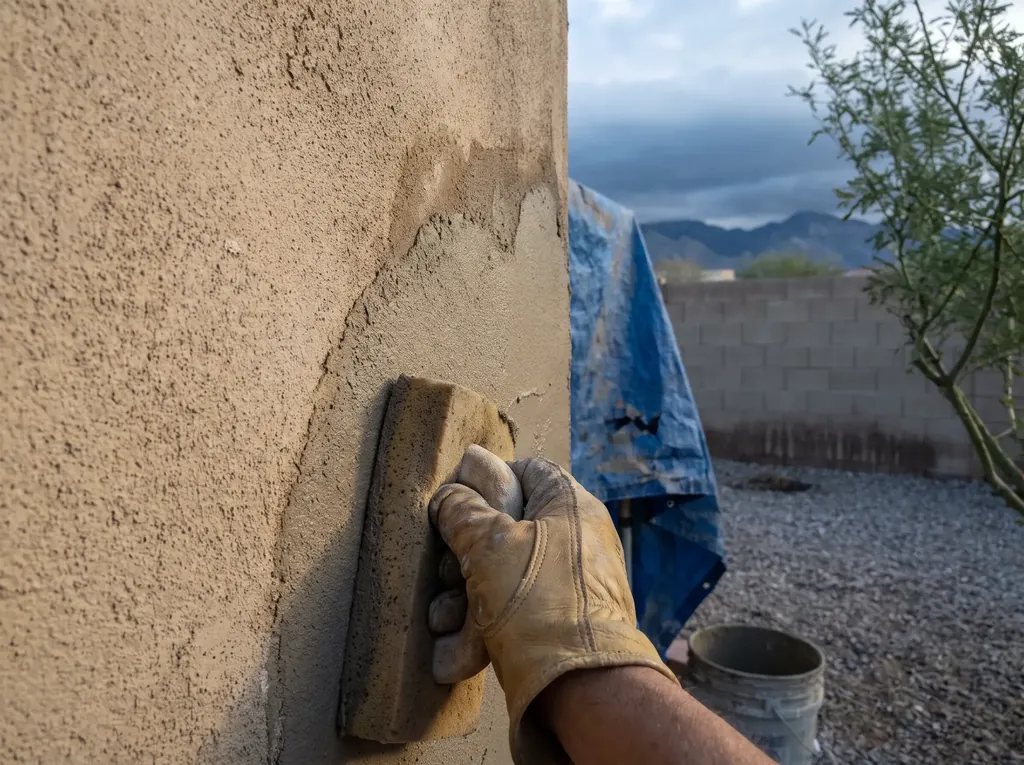
We apply the final coat by hand and work its texture to match the wall, whether that means a sponge float, a brush, a dash or a particular trowel habit from whoever finished your house decades ago.
New finish will not match a wall that has spent years in full sun. Depending on the wall, we blend with a fog coat or a coating, breaking at a natural line such as a corner or control joint so no edge can be seen.
Small jobs tell you a lot about how a company works. A dish mount hole is not glamorous, but it deserves a look behind the surface and the same care on the finish as anything else we do. That is how a modest repair stays modest.
We are also upfront about color, which is where most patching promises fall apart. Old stucco has weathered unevenly, with one shade on the south wall and another under the eave. No new material is going to match that straight out of the bucket. If a patch needs a color blend across part of the wall to disappear, you will know that before the work starts, along with what happens if you decide to skip it.
And if the hole is a symptom, we will say so. Loose stucco that keeps falling off in the same place usually has water behind it. We would rather send you to the real fix than patch the same spot twice.
Send us a photo and tell us how it happened, if you know. We will tell you what it should take to put right.
Yes. Local damage on an otherwise sound wall is a good candidate for a spot repair, and the structure of the patch will hold if the edges are sound. The challenge is appearance. On a weathered wall, a spot repair may stay visible until the color is blended over a wider area.
Stucco that repeatedly lets go has lost its bond, and there is nearly always a reason. The usual ones are water getting behind it, rusted lath, a thin patch laid over a dusty or painted surface, or irrigation keeping the base of the wall wet. Until that cause is dealt with, new stucco tends to follow the old stucco onto the ground.
Remove everything loose until you reach material that is firmly bonded, then fix any torn paper or rusted lath behind it. Rebuild in layers, with a scratch coat and a brown coat, letting each one cure, before adding a finish coat that matches the texture. The steps are simple to list. Getting the bond, the cure and the finish right is where the skill is.
A small, shallow chip on a garden wall is a reasonable weekend job if you can live with the look. Be more cautious with anything that goes through to the paper or lath, sits below a parapet, or is on the front of the house. Those are the places where a poor patch lets water in or stays visible for years.
Some can, especially small chips and holes. Ask how they will check the area for hollow stucco, what they will do about paper and lath, and how they plan to match the texture. If the answers are vague, or the plan is a tube of caulk and a can of paint, the repair will probably show and may not last. Also ask whether they are properly licensed for the size of the job, since rules on contractor work depend on the scope.
Patching over loose material, skipping the torn paper behind the hole, laying one thick coat instead of building layers, working in direct summer sun without keeping the cement damp, using an interior product outdoors, and sealing a wet wall. The last one is the costliest, because it locks the water in.
Because most of the cost is skilled hand labor rather than material. A small patch can still mean cutting back, repairing what is behind it, several separate coats with cure time between them, texture work and color blending, which can take more than one trip. Height, access and how hard the finish is to match drive the rest. We give you a written number after seeing the wall.
We repair stucco holes and failed patches across Tucson, Oro Valley, Catalina Foothills, Marana, Sahuarita, Casas Adobes, Vail and Green Valley.
Areas we serve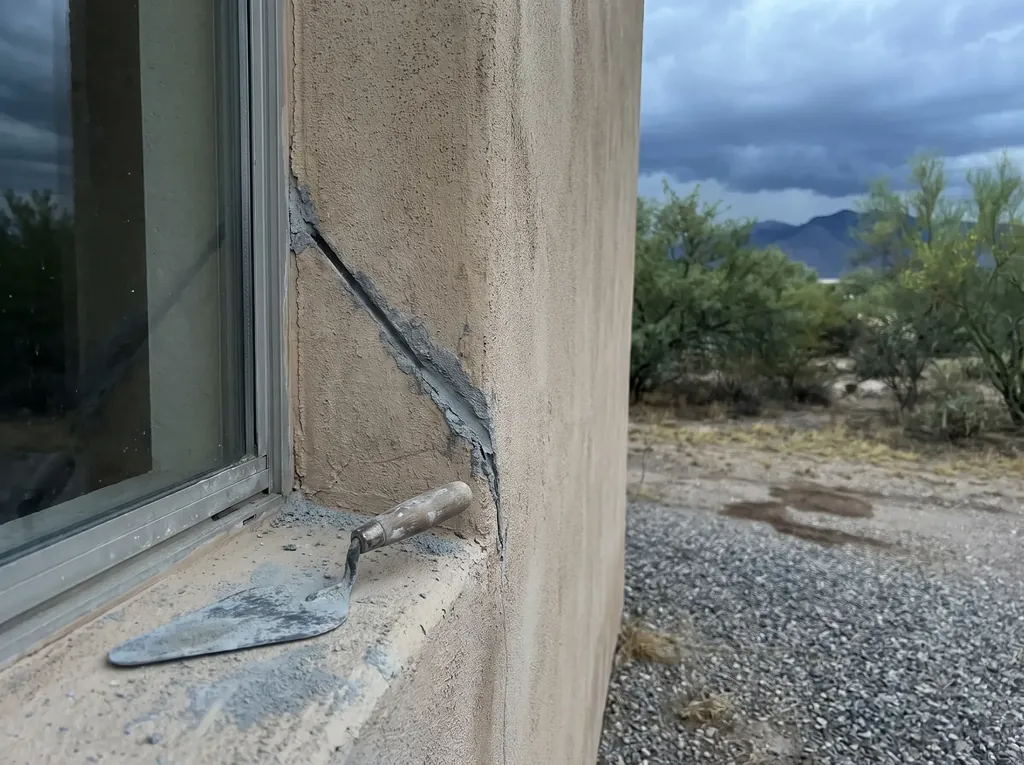
Hairline, window corner and settlement cracks diagnosed first, then routed, filled or rebuilt according to what is actually causing them.
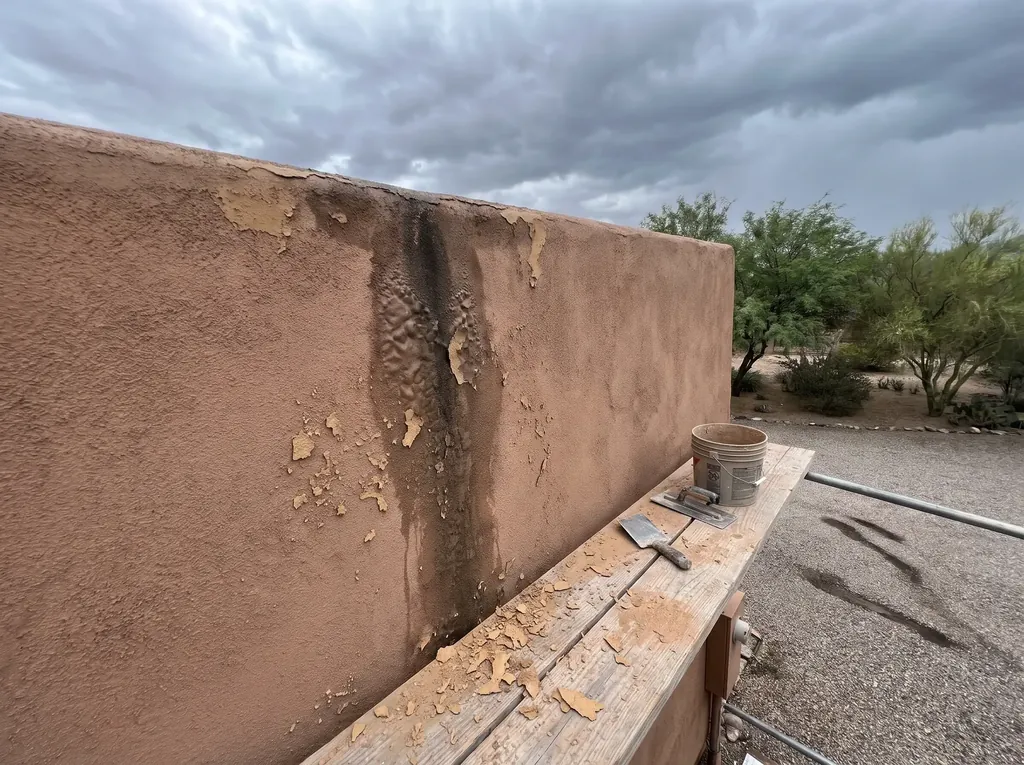
Stains, bubbling and crumbling stucco traced to the source, with parapet caps and roof transitions corrected before the wall is rebuilt.
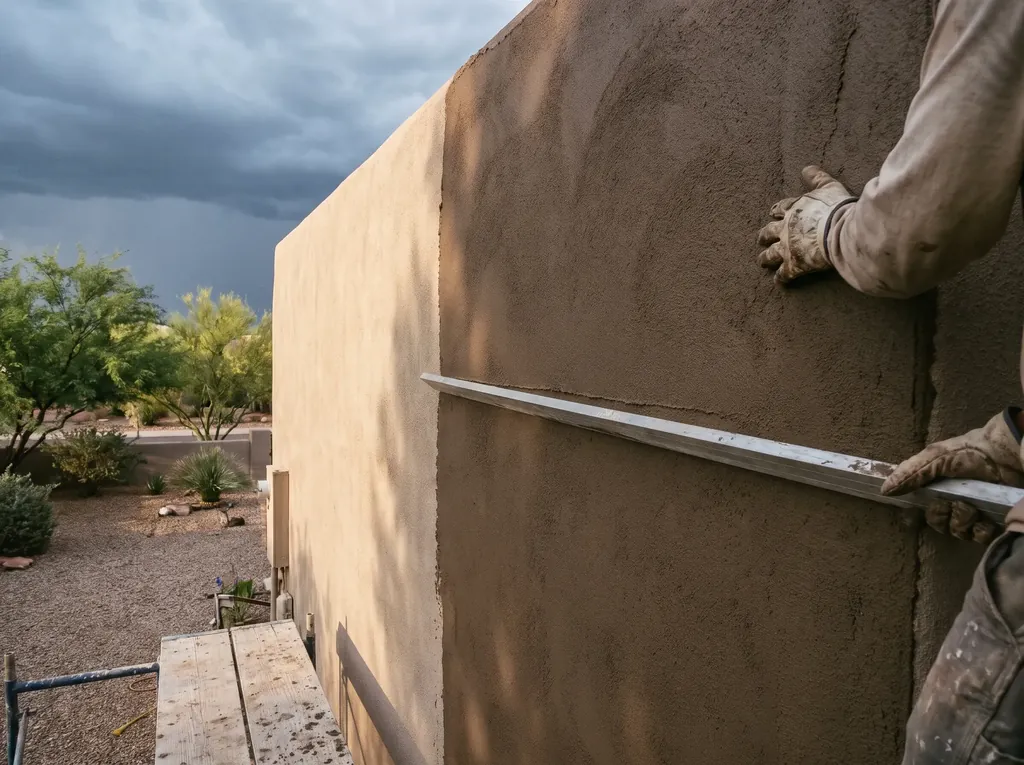
When patches stop making sense, failed stucco is removed or resurfaced and the whole elevation gets a new, even finish.
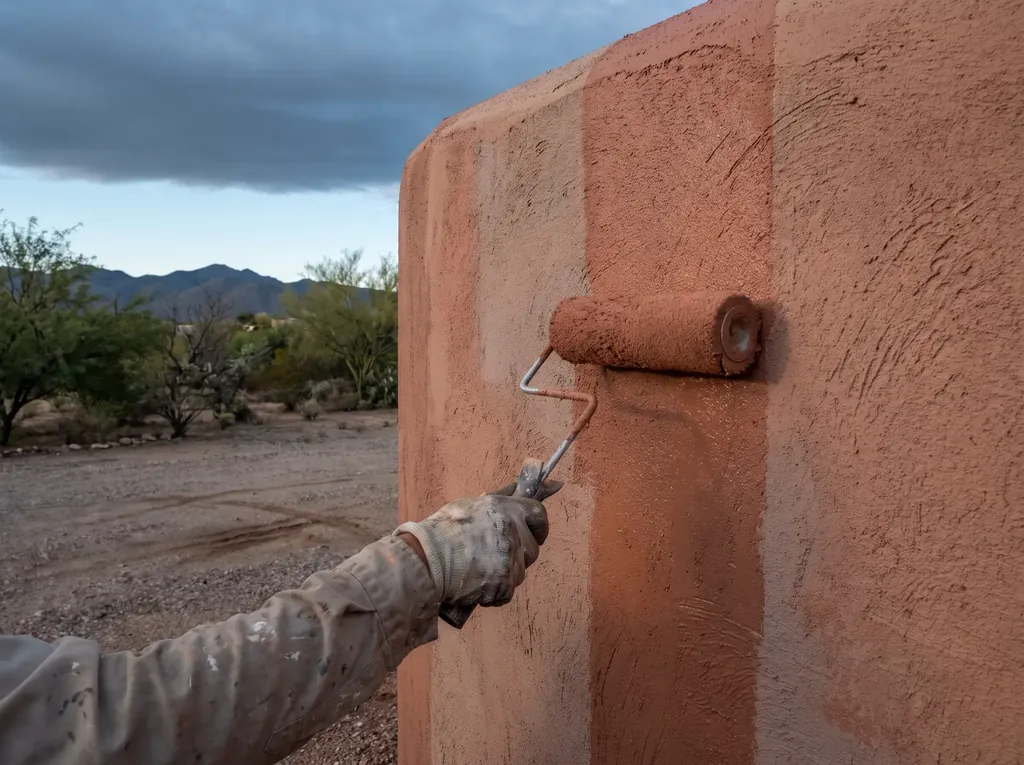
Prep, crack treatment and coatings that suit Tucson sun, including elastomeric systems when the wall and the budget call for them.
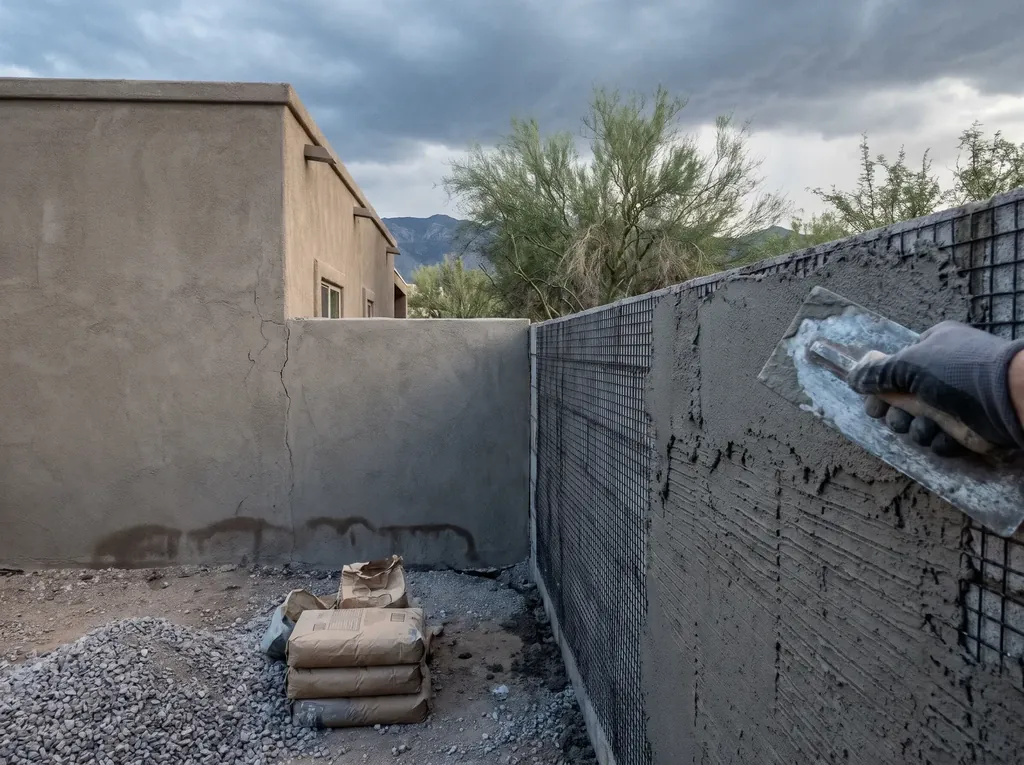
Three coat and one coat systems for additions, garden walls and exterior upgrades, tied properly into existing surfaces.
Repairs and recoats for retail, office, multifamily and HOA properties, scheduled around tenants with one written scope.
Tell us where the damage is and how big it looks. A photo with something for scale helps. We will call you back to arrange a look.
We will call you back to arrange a look at the wall. If you would rather talk now, call(520) 555-0171.
Nothing was sent. Please call (520) 555-0171 and we will arrange a look at the wall.