Additions and casitas
New framed or block construction finished to sit naturally beside the original house, with a joint strategy at the transition and texture worked to match the old wall as closely as possible.
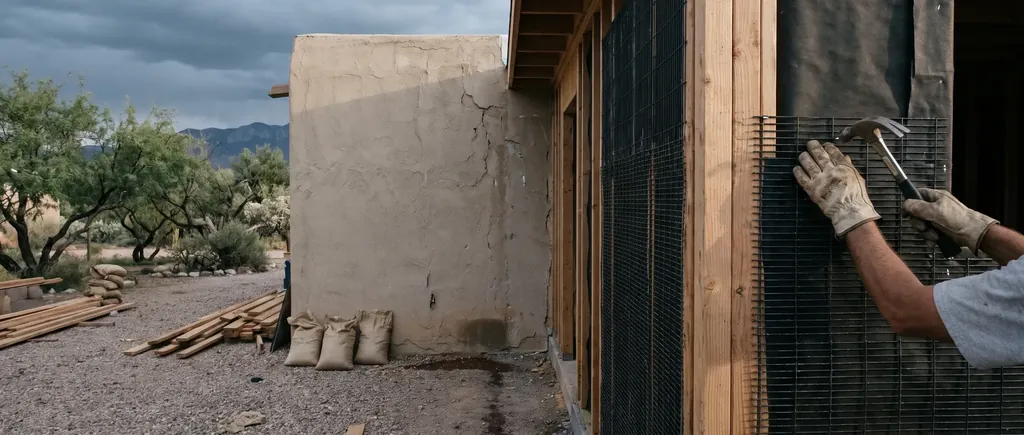
A new room that has to look like it was always part of the house. A bare block wall in the yard. An addition where the new stucco has to meet the old without a visible line. We spend our days fixing stucco that was installed badly, and we build new walls with that in mind.
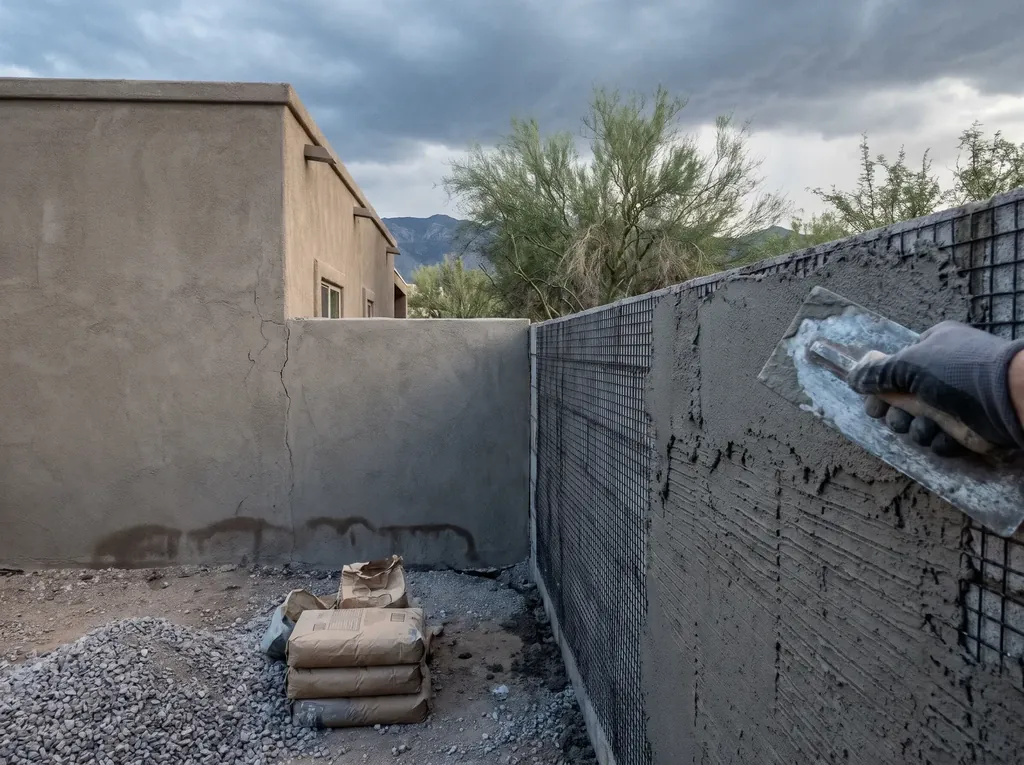
Most of what goes wrong with stucco in Tucson was decided on the day it went up. A wall without enough control joints cracks at every window corner. A weep screed buried under the grade holds moisture at the base for the life of the house. A fresh coat that dried too quickly in June crazes before it has a chance to gain strength. When you repair stucco for a living, you get to see all of these up close, and it changes how you lay out a new wall.
New work is not what we lead with. If your existing wall can be repaired, we will tell you that first. But there are plenty of honest reasons to put up new stucco: a room addition, a casita, a new garden or courtyard wall, a bare block wall you are tired of looking at, or a section of the house where the old surface is coming off for good.
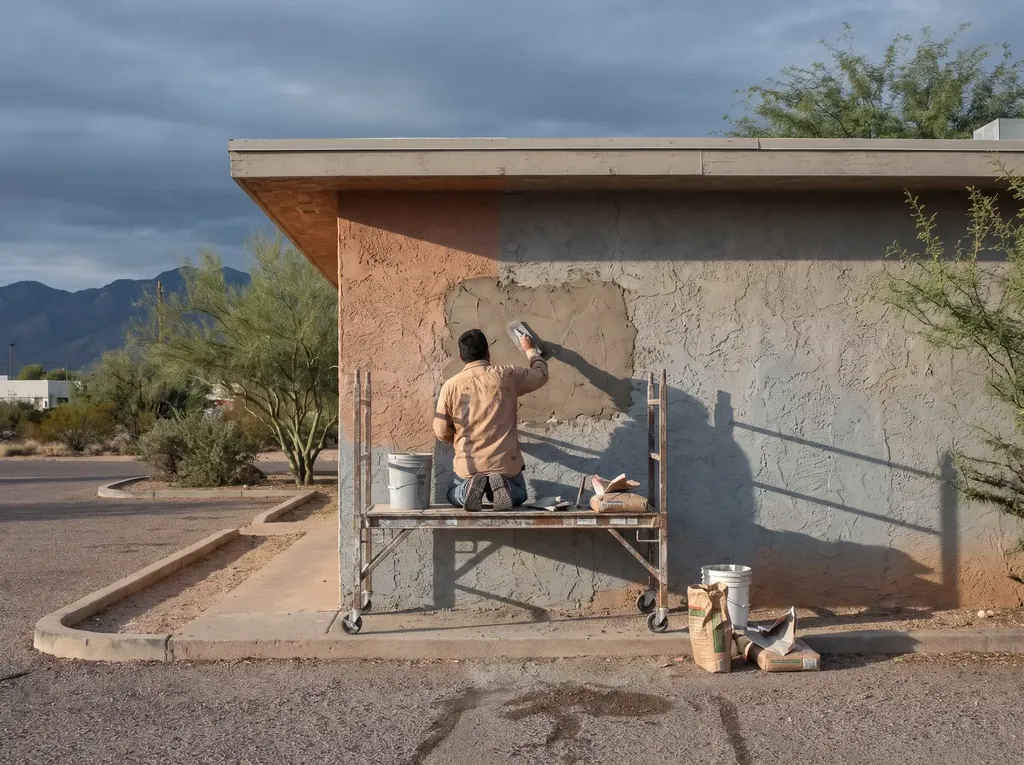
On Southwest homes, the junction with what is already there is usually the hard part. The new wall has to carry the same texture and color as a surface that has been weathering for years. It also needs a sensible way to move separately from the old structure and a plan for keeping water out where the two meet. That is a detail worth drawing out in advance, rather than discovering it with a wet hawk in your hand.
New framed or block construction finished to sit naturally beside the original house, with a joint strategy at the transition and texture worked to match the old wall as closely as possible.
Stucco over block for the garden wall, the courtyard or the side yard. It usually goes directly on the masonry without lath, and it needs a proper top detail so water does not get in from above.
Stucco added to bare block, or used to change the look of a wall that has an unsuitable surface. We check first whether the existing wall can take it, since not every surface is a good candidate.
Framed walls and foam sheathing need paper and lath. Block usually takes stucco directly once it is clean and prepared. A painted surface needs extra work. What is behind the stucco decides how the system gets built.
We talk through traditional three coat stucco, and one coat systems that use a fiber reinforced base under a finish coat. Each has its place, and we will explain which we would use on your wall and why.
We lay out weep screed at the base, casing at openings, corner bead and control joints. On Southwest homes, we also work out parapet tops and scuppers early, because that is where new stucco first gets tested.
We agree on texture and color with samples where it helps. Permit requirements depend on the scope and your jurisdiction, and HOA communities may have their own approval steps, so those get raised early rather than the week before.
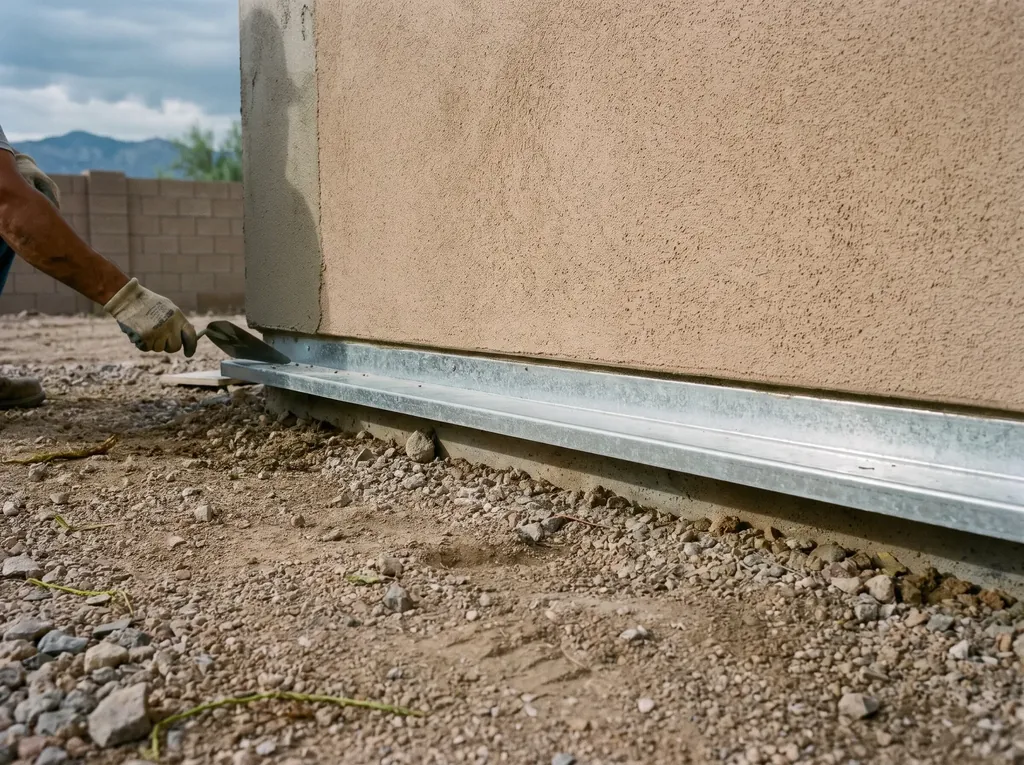
Block gets cleaned and dampened. Framed walls get building paper lapped so water sheds down and out, then flashing at openings coordinated with whoever installed the windows.
Wire lath gets fastened into the framing, not just the sheathing, and held off the wall so the first coat can key behind it. Weep screed, casing, corner bead and control joints go on straight and clean.
On a three coat wall, the first layer is pressed firmly through the lath and raked horizontally. That scoring is what gives the next coat its grip. In dry air it gets misted to keep the cement curing rather than just drying out.
The second coat builds thickness and brings the wall flat and true with a long straightedge. It cures before the finish goes on, and that time pays for itself in fewer cracks. A one coat system combines these stages in a single reinforced base.
The final layer carries the texture and, with integral color, the color as well. It is applied in one continuous pass between natural breaks so that no lap marks show, and we work with the shade whenever we can.
We finish the transitions to the old wall, seal at openings, and check that the weep is clear and the grade is not going to bury it. Then we walk the wall with you.
Because we know how walls fail. Every control joint we place is one we have seen missing somewhere else. Every clear weep screed is a reaction to the crumbling bases we are called to repair. That habit is hard to teach from a spec sheet, and it is why we think people who repair stucco make careful installers.
We also tell you where matching has its limits. New stucco next to a wall with decades of sun on it will not be identical on day one, even with the same texture and a close color. Sometimes the cleanest result comes from breaking at a corner or recoating the adjoining wall. We will explain the choice and let you decide what it is worth.
And if you only came to us because you think your old wall has to come off, we will check that first. Often you need repairs and a recoat rather than new stucco at all.
Tell us what you are building, what it will meet, and where you are in the project. We can work with you or your builder on the stucco.
On a framed house, usually wire lath, then building paper, then sheathing or foam and the wood or metal studs. On block or adobe walls, stucco is often applied directly to the masonry, with no lath or paper at all. In older Tucson homes you can find both on the same property, particularly around additions.
Well built cement stucco can last many decades, and it is not unusual to see old walls still doing their job. The finish wears much sooner than the body of the stucco, and the wall needs its cracks, parapets and coatings kept up. In a dry climate, water at the top and bottom of the wall is what usually ends its life early.
Mostly. A traditional wall combines portland cement and sand with water and usually some lime, built up in layers. Modern one coat systems add fibers and other additives. Synthetic stucco is a different thing altogether: an acrylic finish, often over foam.
Yes, on a normal wall. The base coats provide strength and flatness, and the finish coat provides color, texture and the weathered surface you actually see. Skipping it leaves a rough, more porous wall. An exception would be a wall where a suitable coating is planned instead, and that should be discussed in advance.
It cracks, since it is rigid and buildings move. It is hard to patch invisibly once it has aged. It depends on good details at the base, parapets and openings to manage water, and problems behind it can stay hidden. It also takes skilled labor. In the Tucson climate, it remains a very good fit, as long as those weaknesses are planned for.
It depends on the wall area and height, what the walls are made of, whether you choose a three coat or a one coat system, the texture and color, how many openings and details are involved, and how the new work ties into anything existing. We would not trust a square foot number given over the phone. We give you a written price once we have seen the plans or the walls.
We install new stucco on additions, walls and exterior upgrades across Tucson, Oro Valley, Catalina Foothills, Marana, Sahuarita, Casas Adobes, Vail and Green Valley.
Areas we serve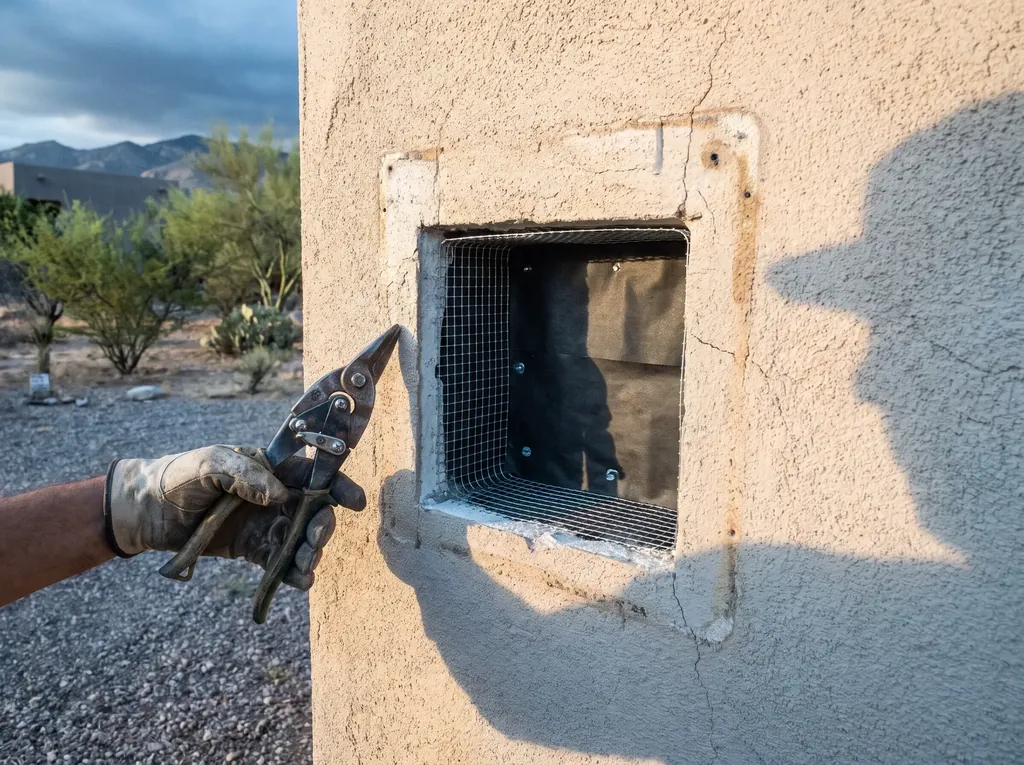
Holes, impact damage, removed fixtures and failed old patches rebuilt in layers, then textured to blend with the wall around them.
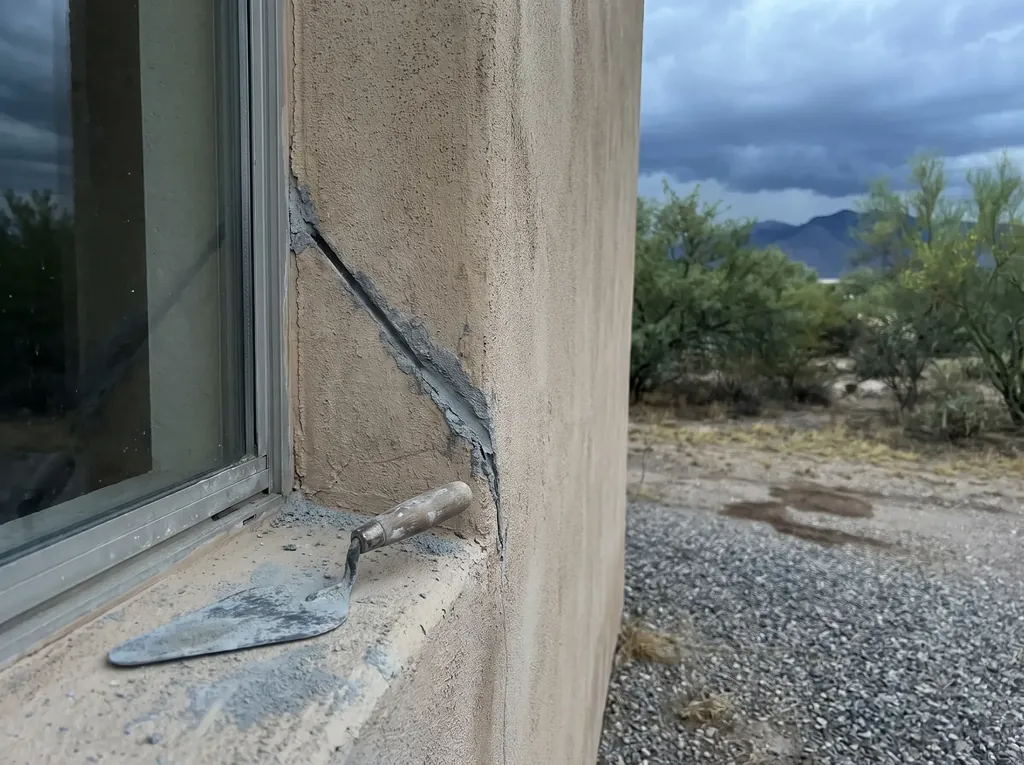
Hairline, window corner and settlement cracks diagnosed first, then routed, filled or rebuilt according to what is actually causing them.
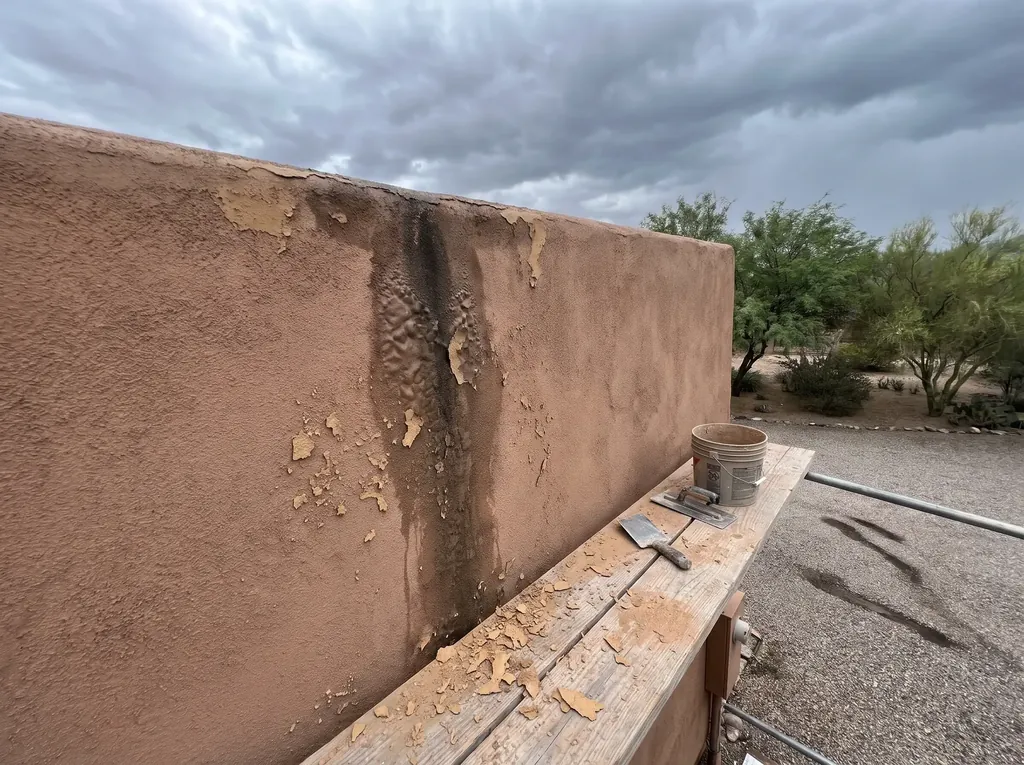
Stains, bubbling and crumbling stucco traced to the source, with parapet caps and roof transitions corrected before the wall is rebuilt.
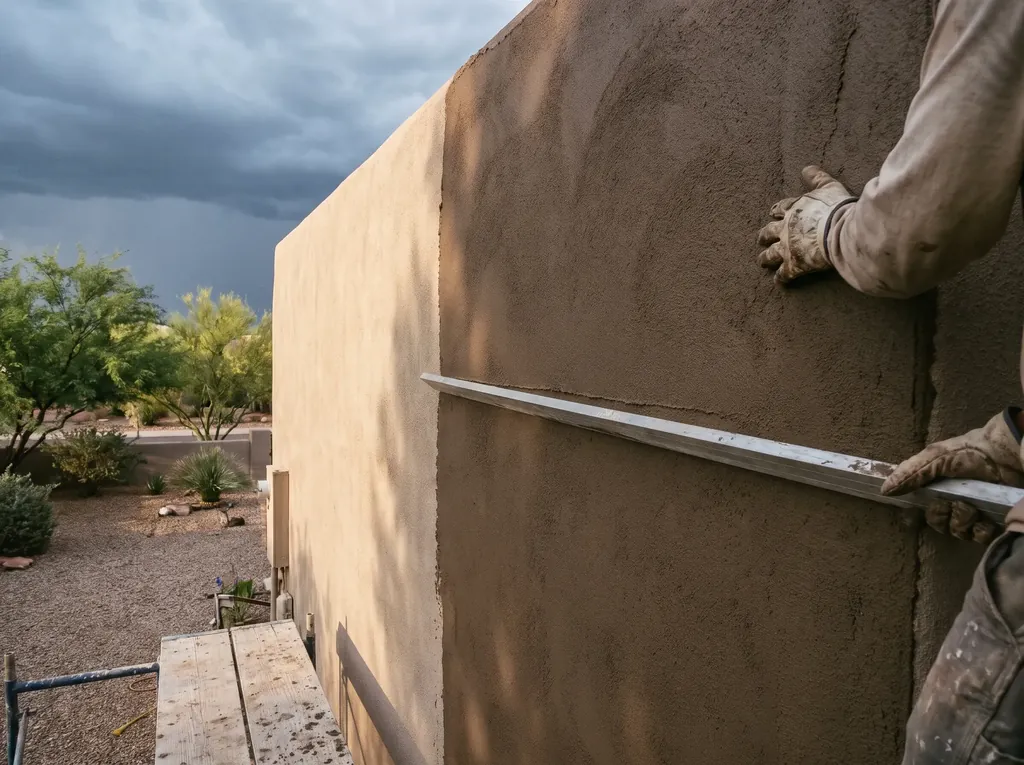
When patches stop making sense, failed stucco is removed or resurfaced and the whole elevation gets a new, even finish.
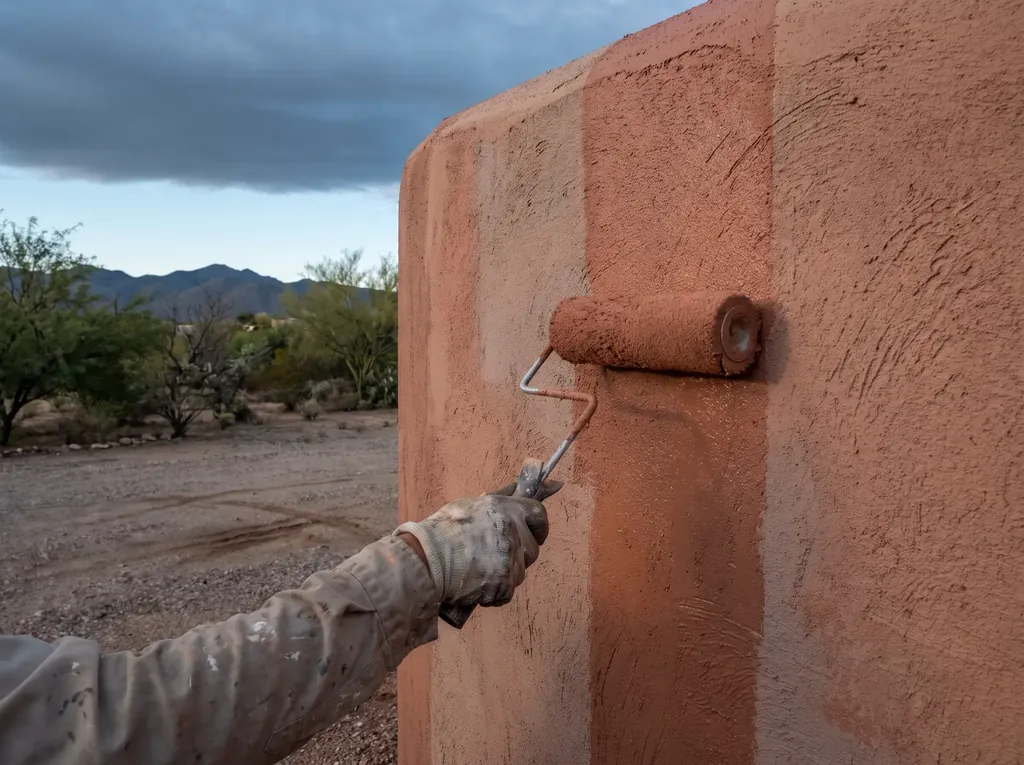
Prep, crack treatment and coatings that suit Tucson sun, including elastomeric systems when the wall and the budget call for them.
Repairs and recoats for retail, office, multifamily and HOA properties, scheduled around tenants with one written scope.
Tell us about the project, what is there today, and any plans or photos you can share. We will call you back to talk it through.
We will call you back to arrange a look at the wall. If you would rather talk now, call(520) 555-0171.
Nothing was sent. Please call (520) 555-0171 and we will arrange a look at the wall.